




In modern manufacturing, precision intelligence turns hidden component data into real factory gains. From power transmission and fluid control to material performance and tolerance analysis, GPCM helps operators and users understand what drives reliability, efficiency, and uptime. This article explores how trusted technical insight supports faster decisions, lower friction, and measurable improvements across complex industrial systems.
For operators and equipment users, the real question behind precision intelligence is simple: how can better technical insight help machines run longer, fail less often, and perform more consistently? Most people searching this topic are not looking for abstract theory. They want to know why some components last, why others create recurring stoppages, and how data about tolerances, materials, lubrication, sealing, and motion transfer can lead to visible improvements on the factory floor.
The short answer is that precision intelligence delivers measurable factory gains when it helps users make better daily decisions. That includes choosing the right bearings, chains, couplings, valves, seals, and hydraulic assemblies; identifying the real source of vibration, leakage, heat, or wear; and preventing small component-level issues from becoming expensive downtime events. When component intelligence is accurate and actionable, factories see gains in uptime, energy efficiency, maintenance planning, product quality, and spare-parts control.
That is where a platform like GPCM becomes valuable. Instead of treating industrial components as simple catalog items, GPCM approaches them as performance-critical units shaped by tribology, fluid dynamics, metallurgy, tolerance control, and operating conditions. For users and operators, that means access to insight that supports practical judgments: what is failing, why it is failing, what should be changed, and which improvements are most likely to produce reliable results.
Why operators care about precision intelligence in the first place
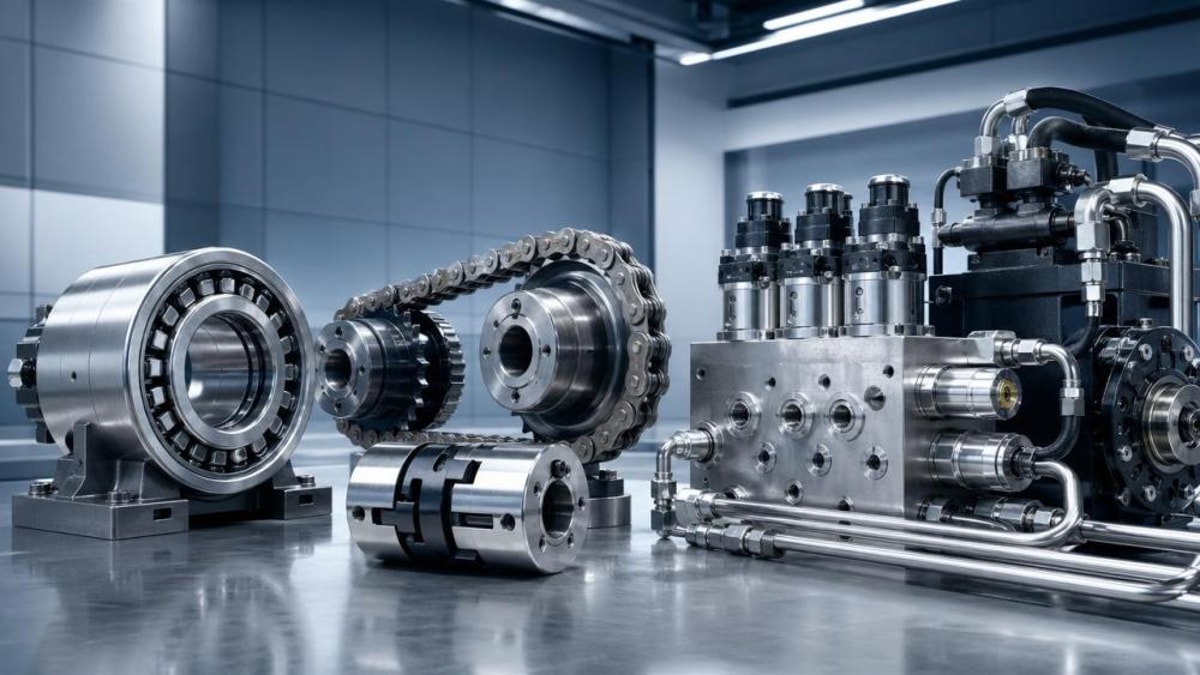
In many factories, production problems are often blamed on large systems such as motors, pumps, automation controls, or full machine assemblies. In reality, the root cause is frequently hidden in smaller precision components. A bearing with the wrong internal clearance, a chain operating under poor lubrication conditions, a valve block with flow instability, or a seal material that cannot tolerate temperature swings can all reduce performance in ways that are hard to see at first.
Operators care about precision intelligence because it helps connect symptoms to causes. If a line runs hotter than normal, if power transmission feels uneven, if hydraulic response becomes inconsistent, or if maintenance intervals are shrinking, users need more than guesswork. They need a reliable way to interpret what the machine is telling them. Precision intelligence provides that bridge between observed behavior and technical explanation.
This matters even more in modern manufacturing environments where machines operate at higher speeds, tighter tolerances, and lower acceptable margins for failure. A small increase in friction, a slight misalignment, or a subtle material incompatibility can spread through the system and affect output quality, cycle time, and asset life. For operators, the value of precision intelligence is that it reduces uncertainty and replaces reactive troubleshooting with informed action.
What measurable factory gains actually look like
Factory gains become meaningful only when they can be seen in daily operations and tracked over time. In practice, measurable gains from precision intelligence usually appear in five areas: less unplanned downtime, more stable throughput, lower maintenance costs, improved component life, and reduced energy loss. These are the results operators notice first because they directly affect workload, line reliability, and production confidence.
Consider a power transmission system with recurring chain wear and inconsistent motion. Without good intelligence, the team may simply replace parts more often. With precision intelligence, they may discover that the true issue is a mismatch between chain specification, lubrication regime, and load pattern. Correcting those factors can extend service life, reduce stoppages, and improve motion accuracy. The gain is not theoretical; it shows up in fewer interventions and smoother operation.
The same pattern applies in fluid control systems. A hydraulic valve block that appears unreliable may actually be suffering from pressure fluctuation, contamination sensitivity, or material wear under certain operating temperatures. When users understand these technical relationships, they can make adjustments that improve stability and reduce leakage or erratic response. That leads to more consistent machine behavior and fewer quality or safety concerns during operation.
How component-level insight prevents costly downtime
Downtime rarely begins as a major event. More often, it starts with small warning signs: unusual noise, rising temperature, inconsistent pressure, excess vibration, or shortened lubrication intervals. Precision intelligence helps operators treat these signs as useful data instead of isolated annoyances. By understanding how components behave under load, speed, temperature, and contamination exposure, users can act before performance drops into failure territory.
This is especially important for components that sit deep inside larger assemblies and are easy to overlook until a stoppage occurs. Bearings, couplings, chains, seals, and valve elements all influence machine continuity. When one of them degrades, the entire line may suffer through increased friction, poor alignment, fluid loss, unstable torque transfer, or reduced response accuracy. The ability to interpret these risks early is one of the most practical forms of precision intelligence.
GPCM supports this process by organizing technical knowledge in a way that connects design properties with operational outcomes. Instead of only showing what a component is, intelligence should show what it does under real working conditions. For an operator, that means clearer answers to critical questions: Is this wear pattern normal? Is this material suitable for my environment? Is this tolerance level helping performance or creating stress in assembly and use?
Where users gain the most value: bearings, motion systems, and fluid control
Not every factory issue requires the same depth of analysis, but certain categories consistently offer high returns when examined through precision intelligence. Bearings are one of the most important because they directly affect friction, heat, stability, and rotational life. Material choice, sealing structure, lubrication path, and load distribution all matter. Even small specification errors can lead to major performance losses over time.
Motion systems also provide major opportunities. Chains, gears, couplings, linear transfer elements, and related drive components determine how efficiently power moves through a machine. If these systems are not matched to dynamic loads, environmental conditions, or maintenance realities, operators often see repetitive wear, noise, backlash, or unstable motion. Precision intelligence helps users move beyond simple replacement cycles and identify the true mechanical reasons for poor performance.
Fluid control is equally critical. Hydraulic and pneumatic systems depend on precision surfaces, pressure behavior, contamination control, and sealing integrity. A factory may experience leakage, delayed actuation, overheating, or inconsistent force output without fully understanding that the root cause lies in valve geometry, material compatibility, or internal flow behavior. For users working with complex equipment, insight in these areas can produce immediate gains in reliability and controllability.
How to use precision intelligence in day-to-day factory decisions
For operators, the best use of precision intelligence is not to become full-time analysts. It is to improve routine decisions with better technical reference points. When a component fails early, the first step should be to compare actual operating conditions with rated conditions. Load, speed, contamination, misalignment, lubrication quality, and thermal variation often reveal whether the issue is product quality, application mismatch, or maintenance process failure.
Second, users should look for patterns instead of isolated events. If similar failures happen across multiple shifts, lines, or machines, there is likely a repeatable cause. Precision intelligence helps frame the investigation: are tolerances stacking up in assembly, is fluid cleanliness below requirement, is the selected material vulnerable to corrosion or fatigue, or is there hidden overloading during peak cycles? Structured questions lead to faster and more accurate conclusions.
Third, decision-making improves when component information is linked to measurable outcomes. If a new bearing design claims longer life, what operating parameter will confirm that? If a maintenance-free chain is introduced, how will users monitor wear behavior and downtime frequency? If a high-pressure hydraulic block is upgraded, what pressure stability or leakage reduction should be expected? Precision intelligence is most useful when it turns technical claims into operational checkpoints.
How GPCM helps users move from information overload to usable insight
Many industrial users already have access to catalogs, supplier datasheets, and maintenance records. The problem is not always a lack of information. More often, the problem is that information is fragmented, generic, or too detached from real application decisions. GPCM adds value by combining market signals, engineering context, and component-level technical interpretation into a more practical intelligence system.
Its Strategic Intelligence Center is particularly relevant for users who need to understand both immediate equipment issues and broader industry shifts. Changes in special steel pricing, availability constraints, evolving trade quotas, and technology development in composite bearings or integrated hydraulic blocks can all influence what components are practical, reliable, and economical to use. This wider context helps users avoid narrow decisions that solve today’s issue but create tomorrow’s risk.
Just as important, GPCM’s focus on tribology, fluid dynamics, industrial economics, and component evolution means that users are not forced to rely on oversimplified explanations. When a machine underperforms, the answer may involve friction behavior, material pairing, pressure loss, fatigue resistance, or system-level demand trends. Intelligence becomes useful when it respects that complexity while still guiding operators toward clear action.
What to check before trusting a component recommendation or technical claim
Operators and users are often asked to approve replacements, upgrades, or alternative brands under time pressure. In those moments, precision intelligence acts as a filter. Before trusting a technical recommendation, users should verify whether the claim is based on actual operating conditions, not just nominal specifications. A component that performs well in standard conditions may fail quickly in high-load, contaminated, high-temperature, or intermittent-duty environments.
It is also important to check whether the recommendation accounts for the whole system. For example, a harder material may improve wear resistance but increase stress elsewhere. A tighter tolerance may improve one type of accuracy while making installation less forgiving. A lower-friction solution may require stricter lubrication discipline. Precision intelligence is valuable because it shows trade-offs, not just advantages.
Finally, good technical judgment depends on evidence. Users should look for documented performance logic, failure analysis references, material compatibility data, lifecycle expectations, and maintenance implications. This does not mean every operator needs advanced engineering models. It means practical decisions should be supported by more than marketing language. The more critical the component, the more important it is to base choices on trusted intelligence rather than assumptions.
Why precision intelligence matters more as factories become more advanced
As factories become more automated, interconnected, and efficiency-driven, the cost of hidden component problems rises. High-speed lines, precision assembly systems, robotics, and energy-optimized equipment all depend on components performing within narrower limits. Small deviations in friction, pressure control, load transfer, or wear behavior can quickly affect output quality and scheduling reliability.
At the same time, maintenance teams are often expected to do more with less. They need faster diagnostics, longer service intervals, better spare-parts decisions, and stronger justification for upgrades. Precision intelligence supports these expectations by helping users focus on the factors that actually influence component life and system performance. It reduces wasted effort on trial-and-error maintenance and improves confidence in root-cause analysis.
This is why the concept is no longer limited to design engineers or procurement specialists. For operators, technicians, and equipment users, precision intelligence is becoming a daily operational advantage. It helps them understand how small components shape big outcomes, and how better interpretation of technical detail can protect uptime, product quality, safety, and long-term equipment value.
Conclusion: better technical understanding leads to better factory performance
Where precision intelligence delivers measurable factory gains is not in theory, but in everyday decisions about reliability, wear, motion, pressure, heat, and maintenance. When users understand the hidden behavior of components inside industrial systems, they are better equipped to prevent failures, improve consistency, and support smarter operational choices. The gains are visible in uptime, efficiency, service life, and fewer repeated problems.
For operators and equipment users, the most important takeaway is that precision intelligence should be practical. It should help answer real questions: why did this component fail, what should be monitored next, which specification matters most, and what change is most likely to improve results? When intelligence serves those needs, it becomes a measurable production tool rather than a passive source of information.
GPCM’s role in this landscape is to turn complex technical and market signals into trusted insight for the precision manufacturing world. By linking material science, tolerance understanding, tribology, fluid control knowledge, and industry evolution, it helps users act with more confidence in demanding factory environments. In a competitive industrial landscape, better component intelligence is not optional support. It is a direct path to more stable, efficient, and resilient manufacturing performance.
Related News
- How to Shortlist a Precision Engineering Supplier for Repeatable QualityMay 05, 2026Precision engineering supplier selection starts with repeatable quality. Learn how to shortlist vendors by tolerances, inspection, materials, and supply reliability.
- Evolutionary Trends in Precision Engineering: What Is Changing in Supplier CapabilitiesMay 05, 2026Evolutionary trends in precision engineering are redefining supplier capabilities—from tighter tolerances to smarter quality systems. Discover how to assess technical credibility and sourcing resilience.
- When Precision Manufacturing OEM Makes Sense Over In-House ProductionMay 05, 2026Precision manufacturing OEM makes sense when in-house production adds hidden cost, quality risk, or delays. Learn when outsourcing improves precision, speed, and project results.
- How to Compare a Precision Machining Manufacturer Without Missing Critical TolerancesMay 05, 2026Precision machining manufacturer comparison starts with critical tolerances, process control, and inspection proof. Learn how to reduce quality risk and choose a supplier with confidence.
Related News
- 00
0000-00
Industrial Automation Components Supplier: Key Compliance Checks Before Scaling Orders - 00
0000-00
How to Shortlist a Precision Engineering Supplier for Repeatable Quality - 00
0000-00
Evolutionary Trends in Precision Engineering: What Is Changing in Supplier Capabilities - 00
0000-00
When Precision Manufacturing OEM Makes Sense Over In-House Production - 00
0000-00
Hydraulic Valve Blocks for Precision Engineering: What Affects Service Life Most
Dr. Alistair Vaughn
Strategic Intelligence Center