





Supply chain competition is intensifying, but the real pressure goes far beyond price and delivery. For distributors, agents, and channel partners, the challenge now lies in securing reliable access to precision components, interpreting technical shifts, and responding to volatile demand with confidence. This article explores where competitive pressure is truly building and how intelligence-driven decisions can strengthen position, resilience, and long-term market influence.
The competitive landscape is changing faster than many channels expected
For years, many firms treated supply chain competition as a negotiation problem. The assumption was simple: stronger purchasing power, lower prices, and faster freight would secure advantage. That logic is no longer enough. Across industrial markets, especially in precision components, motion systems, and fluid control applications, channel competitiveness is now shaped by a broader set of pressures that include technical qualification, supply continuity, compliance, lifecycle reliability, and response speed to shifting customer specifications.
This change matters to distributors and agents because the market is no longer rewarding access alone. End users increasingly expect channel partners to interpret engineering risk, anticipate shortages, recommend alternatives, and explain why one component family is more suitable than another under changing operating conditions. In other words, supply chain competition is moving from a logistics contest to an intelligence contest.
At the same time, pressure is unevenly distributed. The most visible stress often appears in lead times or pricing, but the deeper strain tends to build earlier in the cycle: upstream material constraints, qualification bottlenecks, design changes, and demand volatility across industries. By the time price moves, the real disruption may already be underway.
Signals that the market has entered a new phase
Several market signals show that supply chain competition is becoming structurally different rather than temporarily difficult. Precision manufacturing customers are reducing tolerance for supplier uncertainty. Procurement teams are asking more technical questions. OEMs are reevaluating single-source dependencies. And replacement demand is becoming more sensitive to machine uptime, not just purchase cost.
- More requests for traceability, material data, and certification support
- Higher sensitivity to specification change and interchangeability risk
- Growing demand for local inventory paired with technical advisory support
- Shorter decision windows when equipment downtime threatens production
These signals indicate that channel partners are being measured by how well they reduce uncertainty. In that environment, supply chain competition rewards those who can connect market visibility with engineering awareness.
Why this is especially important in precision component markets
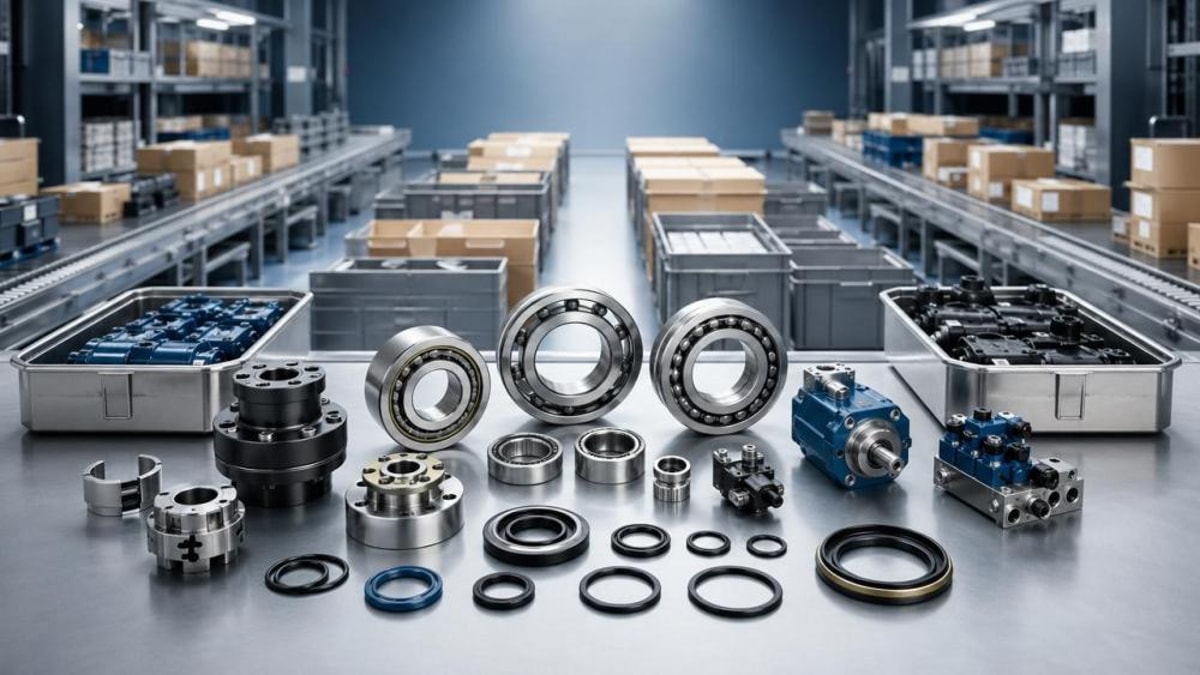
In sectors involving bearings, chains, seals, hydraulic blocks, couplings, and transmission components, substitution is rarely frictionless. A small dimensional deviation, material mismatch, lubrication issue, or pressure tolerance gap can create downstream performance failure. That is why the real pressure in supply chain competition is often hidden inside technical detail rather than shipping schedules alone.
The real pressure is building in four less visible areas
When channel businesses ask where supply chain competition is getting tougher, the first answers usually focus on cost inflation or transportation delays. Those are still relevant, but they are symptoms more than root causes. The more strategic pressure is building in areas that directly affect continuity, credibility, and margin quality.
For distributors and agents, identifying these pressure points early can improve forecasting, supplier selection, stocking logic, and customer communication. The firms that misread these shifts may still move volume, but they will struggle to maintain trust and defend position in more technical accounts.
The table below highlights the most important pressure zones shaping modern supply chain competition.
Technical qualification is now a commercial issue
One of the clearest shifts in supply chain competition is the rise of technical filtering. Customers are not only asking whether a part is available. They are asking whether it can survive duty cycles, resist wear, handle pressure peaks, meet maintenance expectations, and align with system redesigns. This means sales teams that cannot translate specifications into operating consequences are at a growing disadvantage.
In precision markets, technical qualification affects conversion rates, replacement cycles, warranty exposure, and customer retention. A distributor that understands tribology, fluid behavior, sealing conditions, or fatigue performance can prevent costly misalignment before it reaches the machine. That capability turns expertise into commercial leverage.
Continuity pressure is replacing pure cost pressure
Many buyers now accept that the cheapest source is not always the safest source. When a component shortage threatens production, uptime becomes more valuable than a narrow unit-price advantage. This is particularly true where approved substitutes are limited or where downtime costs far exceed procurement savings. In practical terms, supply chain competition increasingly favors those who can protect continuity with credible alternatives, buffer strategies, and better supplier intelligence.
What is driving the shift behind supply chain competition
The current environment did not emerge from a single disruption. It is the result of multiple forces moving together: material instability, geopolitical friction, energy and freight uncertainty, digitalized procurement, rising technical complexity, and the growing expectation for documented quality. These forces reshape how buyers compare suppliers and how channel partners must position themselves.
The most important point is that these drivers reinforce one another. A special steel price movement can influence manufacturing planning. A trade restriction can shrink sourcing flexibility. A design upgrade can invalidate previously acceptable substitutes. And a demand spike in one equipment segment can drain availability from another. This interconnectedness is why supply chain competition feels more intense even when headline indicators appear stable.
For decision-makers, understanding the drivers matters because response quality depends on diagnosis. If the issue is only pricing, negotiation may help. If the issue is qualification risk, then commercial tactics alone will fail.
Key drivers worth monitoring now
- Material and input volatility affecting cost structure and lead-time reliability
- Regional policy shifts influencing trade access, quotas, and sourcing options
- Higher performance requirements for longer-life, lower-friction, lower-maintenance parts
- Customer preference for fewer, more capable channel partners with technical depth
- Faster information circulation, which rewards firms that interpret signals early
The hidden role of specification evolution
An overlooked driver in supply chain competition is specification evolution. Equipment builders are continuously optimizing around efficiency, maintenance intervals, noise reduction, compactness, and sustainability. As a result, a component that was commercially adequate two years ago may now be technically marginal. This shift raises the value of intelligence platforms such as GPCM, where technical trend tracking can help channel partners understand not only what is available, but what is becoming more relevant.
For distributors, this means product knowledge can no longer be static. Competitive strength increasingly depends on recognizing which component categories are moving toward tighter tolerances, new materials, integrated assemblies, or stricter service expectations.
Who feels the impact most, and how the pressure shows up in daily business
Although supply chain competition affects the entire market, the pressure does not look the same for every participant. Distributors, regional agents, importers, and industrial resellers all experience different versions of the same shift. What unites them is that execution mistakes now carry larger consequences because customers have less patience for uncertainty.
For channel partners serving precision manufacturing, the practical impacts are visible in quotation speed, stock planning, technical communication, and account retention. Teams that rely on reactive routines often find themselves overexposed when demand changes quickly or when a supplier issue escalates without warning.
A clearer view of impact by business role can help companies allocate attention more effectively.
Margin pressure is no longer only a pricing issue
In today’s supply chain competition, margin erosion often comes from hidden costs: emergency sourcing, technical misfit, expedited logistics, excess stock, failed replacements, and time lost in customer clarification. Firms that focus only on purchase price may overlook these more damaging profit leaks. Better intelligence can improve margin not by forcing lower prices, but by reducing avoidable friction across the order cycle.
Customer confidence is becoming a measurable asset
As markets become less predictable, buyers gravitate toward partners who can explain what is happening and what should be done next. That makes confidence a business asset. The channel partner who can interpret trend signals, communicate risk clearly, and support application choices often becomes harder to replace than one who competes only on price.
How distributors and agents can respond with stronger judgment
The answer to rising supply chain competition is not to react harder. It is to decide better. That means combining market visibility, technical understanding, and commercial discipline into a more structured operating model. For many channel businesses, the opportunity lies in upgrading from transactional response to intelligence-led planning.
A useful response framework starts with prioritization. Not every product line, supplier, or customer segment carries the same exposure. High-dependency items, long qualification cycles, and technically sensitive applications deserve the closest monitoring. Similarly, not every market signal deserves immediate action. The goal is to distinguish noise from meaningful direction.
This is where specialized intelligence matters. Platforms focused on precision components and motion technologies can help channel partners translate raw updates into practical decisions about sourcing, positioning, and customer strategy.
A practical response checklist
- Map which SKUs are technically difficult to substitute and protect them first
- Track supplier signals beyond price, including process stability and qualification change
- Segment customers by uptime sensitivity, not only by annual volume
- Equip sales teams with application-level talking points, not just catalog data
- Use trend intelligence to review stock logic before disruption becomes visible
Why intelligence-led channel strategy is gaining value
In a tighter market, information quality shapes bargaining power. Knowing which component categories are tightening, which materials are under pressure, which applications are moving toward upgraded specifications, and which regions may face policy shifts allows channel partners to speak earlier and act faster. That is not abstract analysis. It directly affects quotations, inventory confidence, conversion probability, and account growth.
The firms that win in supply chain competition will not necessarily be the largest. They will be the ones that reduce uncertainty for customers while protecting their own decision quality. Precision knowledge, not just purchasing volume, is becoming a decisive form of market power.
What to monitor next if you want a stronger market position
Looking ahead, distributors, agents, and industrial channel partners should watch for signals that reveal where pressure is building before it becomes obvious. These include recurring engineering change requests, unusual shifts in order cadence, greater demand for long-life components, and rising customer focus on service intervals, energy efficiency, and compliance documentation. Such signals often appear before a visible escalation in supply chain competition.
It is also important to review whether your organization can answer a few practical questions. Which product families are most exposed to qualification bottlenecks? Which supplier relationships are informationally strong but operationally fragile? Which customers rely on you for risk interpretation rather than only supply? And where are you still making stocking or substitution decisions without enough technical evidence?
If your business wants to improve its position, resilience, and influence under rising supply chain competition, start by confirming where uncertainty is highest and where intelligence can create the fastest advantage. In precision component markets, the real pressure is rarely just about cost. It is about who can understand change early, judge impact accurately, and respond with confidence that customers can trust.
Related News
- How to Shortlist a Precision Engineering Supplier for Repeatable QualityMay 05, 2026Precision engineering supplier selection starts with repeatable quality. Learn how to shortlist vendors by tolerances, inspection, materials, and supply reliability.
- Evolutionary Trends in Precision Engineering: What Is Changing in Supplier CapabilitiesMay 05, 2026Evolutionary trends in precision engineering are redefining supplier capabilities—from tighter tolerances to smarter quality systems. Discover how to assess technical credibility and sourcing resilience.
- When Precision Manufacturing OEM Makes Sense Over In-House ProductionMay 05, 2026Precision manufacturing OEM makes sense when in-house production adds hidden cost, quality risk, or delays. Learn when outsourcing improves precision, speed, and project results.
- How to Compare a Precision Machining Manufacturer Without Missing Critical TolerancesMay 05, 2026Precision machining manufacturer comparison starts with critical tolerances, process control, and inspection proof. Learn how to reduce quality risk and choose a supplier with confidence.
Related News
- 00
0000-00
Industrial Automation Components Supplier: Key Compliance Checks Before Scaling Orders - 00
0000-00
How to Shortlist a Precision Engineering Supplier for Repeatable Quality - 00
0000-00
Evolutionary Trends in Precision Engineering: What Is Changing in Supplier Capabilities - 00
0000-00
When Precision Manufacturing OEM Makes Sense Over In-House Production - 00
0000-00
Hydraulic Valve Blocks for Precision Engineering: What Affects Service Life Most
Dr. Alistair Vaughn
Strategic Intelligence Center