





In today’s competitive supply chain, delays in precision machining can disrupt procurement plans, increase costs, and affect delivery commitments. From material shortages and complex tolerances to scheduling bottlenecks and quality control setbacks, multiple factors can extend lead times unexpectedly. Understanding what drives these delays helps procurement professionals evaluate suppliers more effectively and make smarter sourcing decisions in precision machining projects.
For most buyers, the real question is not simply why precision machining lead times slip, but which delays are predictable, which are preventable, and which signal deeper supplier risk. In practice, long lead times usually come from a combination of engineering complexity, shop capacity constraints, raw material availability, inspection requirements, and communication gaps between customer and manufacturer.
If you are responsible for sourcing machined parts, the most useful approach is to look beyond quoted delivery dates and examine the process behind them. A supplier may promise fast turnaround, but if their material planning, programming workflow, metrology resources, or secondary operations are weak, delays can appear late in the order cycle. Knowing where lead time is created allows procurement teams to compare suppliers on execution reliability, not just price.
What usually causes delays in precision machining lead times?
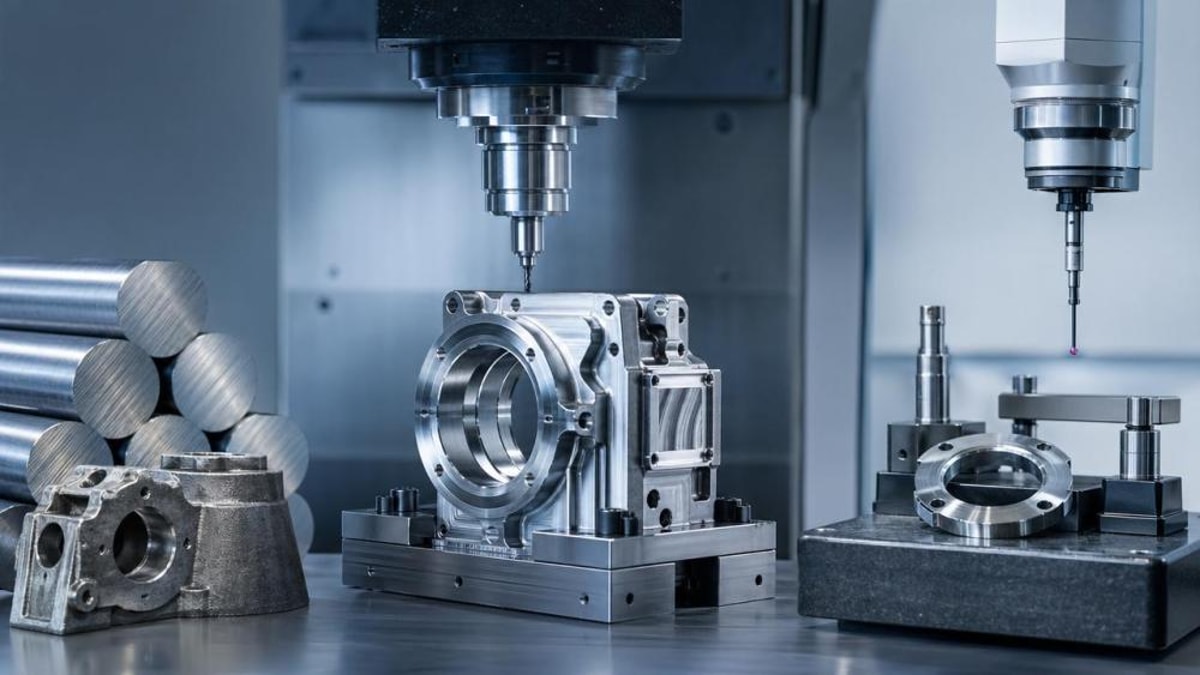
The most common causes of delays in precision machining fall into a few recurring categories: material procurement, machine scheduling, part complexity, tooling preparation, quality control, and post-machining finishing. These issues rarely happen in isolation. A difficult alloy may require special tooling, slower cutting speeds, added inspection, and outsourced heat treatment, turning a small production run into a much longer lead-time commitment.
For procurement professionals, the key insight is that lead time is built across the entire manufacturing chain. A supplier may machine the part itself in three days, but if they wait two weeks for bar stock, lose another week in queue behind existing jobs, and need extra time for final inspection, the real delivery date stretches far beyond the machining window. This is why RFQ comparisons that focus only on cycle time can be misleading.
Delays are also more likely when the order involves new part introduction, low-volume high-mix production, or highly customized geometries. Repeat parts with stable process history are usually easier to schedule and control. New parts demand programming validation, fixturing decisions, first-article inspection, and sometimes design clarification. From a buyer’s perspective, this means the procurement risk is often higher at the start of a project than in later replenishment orders.
How do material shortages and supply conditions affect machining schedules?
Raw material is one of the biggest hidden drivers of lead-time variability in precision machining. If a part uses common aluminum or standard stainless grades, sourcing is often straightforward. But when the drawing calls for aerospace alloys, hardened tool steels, certified traceability, special dimensions, or imported material specifications, availability can quickly become the critical path. Even before machining starts, the supplier may be waiting on mills, stockists, or international shipments.
Material condition matters as much as material grade. Precision parts often require stress-relieved stock, forged blanks, ground plate, or pre-hardened bar to reduce distortion and improve machining consistency. These conditions are not always available off the shelf. When buyers request exact certifications or narrow approved-source lists, the procurement side gains quality assurance, but the manufacturing side may lose flexibility in material substitution and scheduling.
Procurement teams should also remember that material delays are not always external. Some suppliers order stock only after receiving a purchase order, while others hold strategic inventory for common part families. This difference directly affects responsiveness. When evaluating vendors, ask whether they carry safety stock, use long-term mill agreements, or have alternate sources for equivalent materials. A supplier with stronger material planning can often outperform a lower-cost competitor during volatile market conditions.
Why do tight tolerances and complex geometries extend lead times?
Not all machined parts consume lead time equally. A simple turned shaft with generous tolerances may move quickly through production, while a precision housing with multiple datums, fine surface finishes, deep cavities, true-position requirements, and difficult materials can require far more engineering and machine time. The more demanding the tolerances, the smaller the process window and the greater the chance that operations must proceed slowly and carefully.
Complexity affects more than cutting time. It influences setup planning, fixture design, tool selection, CAM programming, in-process inspection, and final verification. A part may need multiple machine orientations, custom jaws, probing routines, or multi-axis machining strategies. Each added requirement creates another place where errors can occur or rework can be triggered. For the supplier, this means more preparation time. For the buyer, it means quoted lead times should reflect technical reality, not just sales ambition.
There is also a yield factor. When tolerances are very tight, the likelihood of scrap or first-pass rejection increases, especially during initial runs. That risk forces responsible suppliers to build buffer time into the schedule. Buyers sometimes interpret that as slow execution, but in many cases it is sound risk management. If a supplier quotes unusually short lead times for technically difficult parts, procurement should verify whether inspection planning and process capability have been properly considered.
How do shop capacity and production scheduling create bottlenecks?
Even highly capable machine shops face capacity constraints. The issue is not only the number of CNC machines on the floor, but whether the right machine type is available at the right time. A supplier may have many lathes but only one five-axis machining center, one grinder, or one EDM cell. If your part depends on a constrained resource, it may wait in queue even when the supplier appears busy but well equipped.
Scheduling becomes especially difficult in high-mix environments where urgent jobs, engineering changes, and small-lot orders compete for the same resources. Precision machining shops often juggle prototypes, recurring production, repair work, and rush orders simultaneously. One delayed setup, tool breakage event, or material shortage can cascade across the entire schedule. This is why lead times sometimes slip even at experienced suppliers with strong technical teams.
For procurement, the practical lesson is to evaluate scheduling discipline, not just installed capacity. Ask suppliers how they prioritize jobs, how frequently they re-sequence work, and whether they use finite capacity planning. Also ask which operations are true bottlenecks. A supplier with transparent scheduling logic and realistic loading is often a safer long-term partner than one that accepts every order aggressively and resolves conflicts later on the shop floor.
Can tooling, programming, and setup preparation become major delay points?
Yes, especially for new or technically demanding parts. Before chips are cut, the supplier may need to review the model, create CAM programs, select cutting strategies, order special tools, design fixtures, and validate workholding. These preparation steps are essential to successful precision machining, but they are often underestimated by buyers because they happen before visible production begins.
Tooling delays are common when parts require nonstandard diameters, long-reach cutters, form tools, thread mills for uncommon profiles, or wear-resistant tooling for hard materials. If these tools are not in stock, lead time expands immediately. Setup complexity adds another layer. A difficult part may need multiple fixtures or a first-article prove-out that consumes machine availability before full production can start.
Programming quality also has a direct effect on lead time reliability. Inadequate process planning can cause collisions, dimensional instability, excessive cycle times, or repeated adjustments during first run. Strong suppliers reduce this risk through simulation, setup sheets, standardized work instructions, and experienced manufacturing engineers. Buyers should not treat pre-production time as administrative overhead. In precision machining, that upfront engineering work is often what prevents costly delivery failures later.
How do inspection and quality control slow delivery?
Quality assurance is a frequent but necessary source of lead-time extension in precision machining. When parts carry strict dimensional, geometric, or surface requirements, inspection cannot be treated as a quick final step. The supplier may need in-process checks, CMM programming, gauge validation, first-article approval, material certification review, and detailed documentation before parts are cleared for shipment.
This becomes more pronounced in regulated or high-reliability sectors, where traceability and process evidence matter as much as the part itself. If the drawing requires PPAP-style packages, FAIR reports, lot traceability, or serialized inspection records, the administrative and metrology workload can be substantial. Procurement teams should expect these requirements to increase lead time and cost, even when the actual machining cycle is efficient.
Another factor is metrology capacity. A shop may have adequate machine tools but limited CMM availability or too few quality engineers. In that situation, finished parts can sit waiting for inspection release. This is a classic procurement blind spot because the delay happens after manufacturing appears complete. To reduce surprises, buyers should ask how inspection is resourced, whether reports are automated, and which dimensions are considered process-critical.
What role do outside processes and secondary operations play?
Many machined parts are not complete when they leave the CNC machine. They may require heat treatment, anodizing, plating, grinding, coating, passivation, laser marking, assembly, cleaning, or special packaging. These secondary operations are often outsourced, and each outsourced step introduces transportation time, supplier queue time, and coordination risk. In many jobs, the secondary process becomes the longest part of the lead time.
Outside processing creates additional uncertainty because it depends on another company’s capacity, quality system, and turnaround discipline. If a plating vendor is overloaded or a heat treatment batch is delayed, the machining supplier may have little direct control over recovery. This is especially true when approved processors are limited by customer specification or compliance requirements.
Procurement teams should request a breakdown of which steps are performed in-house and which are subcontracted. A supplier that manages trusted secondary partners well can still deliver consistently, but the risk profile is different from a vertically integrated shop. If timing is critical, ask where the longest external queue usually occurs and whether alternate approved sources are available.
Why do communication gaps between buyer and supplier lead to schedule slips?
Some of the most avoidable delays in precision machining come from unclear information at the start of the order. Missing CAD files, inconsistent revision levels, ambiguous tolerances, undefined cosmetic standards, or incomplete inspection expectations can stop a job before it begins. When the supplier must request clarification after release, valuable time is lost, and production slots may be reassigned to other work.
Change management is another common issue. Engineering updates after PO placement can force reprogramming, fixture changes, material replacement, or inspection plan revisions. Even small drawing changes may have large schedule effects if the part is already in process. Procurement teams that coordinate closely with engineering and quality can reduce this disruption by locking specifications earlier and communicating revision control clearly.
Good suppliers usually raise manufacturability questions early, but buyers should not assume silence means alignment. A disciplined RFQ and order-release package should define revision status, required certifications, approved substitutions, packaging, delivery priorities, and acceptance criteria. The clearer the commercial and technical inputs, the more stable the machining schedule will be.
How can procurement teams reduce the risk of precision machining delays?
The most effective way to reduce delay risk is to source based on process capability and planning maturity, not only unit price. During supplier selection, ask detailed questions: Is the material in stock? Which operation is the bottleneck? Are fixtures and tooling already available? What inspection resources will be used? Are finishing processes in-house or outsourced? These questions reveal whether the quoted lead time is operationally credible.
It also helps to segment parts by risk. Routine components with standard materials and open tolerances can often be dual-sourced and bought more aggressively on cost. High-risk parts with difficult geometries, specialty alloys, or strict documentation requirements should be placed with suppliers that have proven engineering depth and stronger communication habits. Applying the same sourcing logic to every machined part usually increases total supply risk.
Where possible, buyers can shorten lead times by sharing forecasts, approving equivalent materials in advance, standardizing specifications, and avoiding unnecessary tolerance tightness. Early supplier involvement is especially valuable for new designs. When machinists can review the part before release, they may suggest changes that preserve function while improving manufacturability, reducing both lead time and cost.
What should buyers look for when evaluating a machining supplier’s lead-time reliability?
Reliable suppliers tend to show a few consistent traits. They ask technical questions early, explain assumptions behind the quote, identify long-lead materials or outside processes, and distinguish machining time from total order lead time. They are also willing to discuss capacity constraints honestly rather than offering optimistic dates without operational backing.
Look for evidence of planning discipline: formal production scheduling, documented inspection workflows, material traceability, supplier management for finishing operations, and clear escalation procedures when problems arise. On-time delivery performance is useful, but it should be viewed together with part complexity and quality outcomes. A supplier that ships on time by cutting corners in inspection or process control may create larger downstream costs.
Finally, pay attention to communication quality. In precision machining, responsiveness is often a leading indicator of execution stability. Suppliers that provide timely updates, flag risks early, and propose alternatives when constraints appear are easier to work with and easier to trust. For procurement professionals, that transparency is not a soft factor. It is a practical tool for protecting schedules, budgets, and customer commitments.
Conclusion: delays are manageable when buyers understand where lead time is really created
Delays in precision machining lead times are usually caused by a chain of technical and operational factors rather than a single failure point. Material shortages, tight tolerances, programming effort, machine bottlenecks, inspection demands, outside processing, and unclear communication can all extend delivery. For procurement teams, the important task is to identify which of these risks apply before the order is released.
The strongest sourcing decisions come from understanding how a supplier actually executes precision machining, not just how quickly they quote. When buyers evaluate material strategy, engineering preparation, capacity realism, quality resources, and subcontract process control, they gain a much clearer picture of delivery reliability. That leads to better supplier selection, fewer surprises, and more resilient procurement planning.
In short, precision machining lead-time delays are often predictable if you know where to look. Buyers who ask better questions and align technical requirements early are in a far stronger position to control risk, protect timelines, and secure dependable supply in a demanding manufacturing environment.
Related News
- How to Shortlist a Precision Engineering Supplier for Repeatable QualityMay 05, 2026Precision engineering supplier selection starts with repeatable quality. Learn how to shortlist vendors by tolerances, inspection, materials, and supply reliability.
- Evolutionary Trends in Precision Engineering: What Is Changing in Supplier CapabilitiesMay 05, 2026Evolutionary trends in precision engineering are redefining supplier capabilities—from tighter tolerances to smarter quality systems. Discover how to assess technical credibility and sourcing resilience.
- When Precision Manufacturing OEM Makes Sense Over In-House ProductionMay 05, 2026Precision manufacturing OEM makes sense when in-house production adds hidden cost, quality risk, or delays. Learn when outsourcing improves precision, speed, and project results.
- How to Compare a Precision Machining Manufacturer Without Missing Critical TolerancesMay 05, 2026Precision machining manufacturer comparison starts with critical tolerances, process control, and inspection proof. Learn how to reduce quality risk and choose a supplier with confidence.
Related News
- 00
0000-00
Industrial Automation Components Supplier: Key Compliance Checks Before Scaling Orders - 00
0000-00
How to Shortlist a Precision Engineering Supplier for Repeatable Quality - 00
0000-00
Evolutionary Trends in Precision Engineering: What Is Changing in Supplier Capabilities - 00
0000-00
When Precision Manufacturing OEM Makes Sense Over In-House Production - 00
0000-00
Hydraulic Valve Blocks for Precision Engineering: What Affects Service Life Most
Dr. Alistair Vaughn
Strategic Intelligence Center