




Industrial intelligence is reshaping how factories react to change, giving operators faster insight into equipment status, component performance, and process risks. In precision manufacturing, where every second and tolerance matter, smarter data-driven decisions can reduce downtime, improve coordination, and strengthen production resilience. This article explores how industrial intelligence is accelerating factory response speed and why it matters for frontline users.
Why factory response speed is becoming a decisive competitive signal
Across manufacturing, the most visible change is not simply that factories are becoming more automated. The deeper shift is that response speed now defines operational strength. Customers expect shorter lead times, product variation is increasing, supply chains remain uneven, and machine uptime is under constant pressure. In that environment, industrial intelligence is moving from a useful enhancement to a practical requirement for daily execution.
For operators, this change appears on the shop floor as faster alerts, clearer equipment conditions, and better visibility into whether a line can maintain precision under load. For supervisors and maintenance teams, it means fewer decisions based only on experience and more decisions supported by condition data, trend analysis, and process correlation. In precision component and motion-related industries, this is especially important because small deviations in vibration, lubrication, torque transfer, or fluid pressure can quickly become larger production losses.
The rise of industrial intelligence also reflects a broader industrial reality: factories can no longer wait for monthly reports to understand what happened. They need near-real-time awareness of what is changing now, what is likely to fail next, and which process bottlenecks are spreading across upstream and downstream operations.
From delayed reaction to live operational awareness
Traditional response models relied on fixed inspection intervals, manual recording, and operator intuition. Those methods still matter, but they are no longer enough when factories run high-mix production with tighter tolerance windows. Industrial intelligence connects machine signals, maintenance history, process data, and production context so that operators can detect abnormal patterns earlier and respond with more confidence.
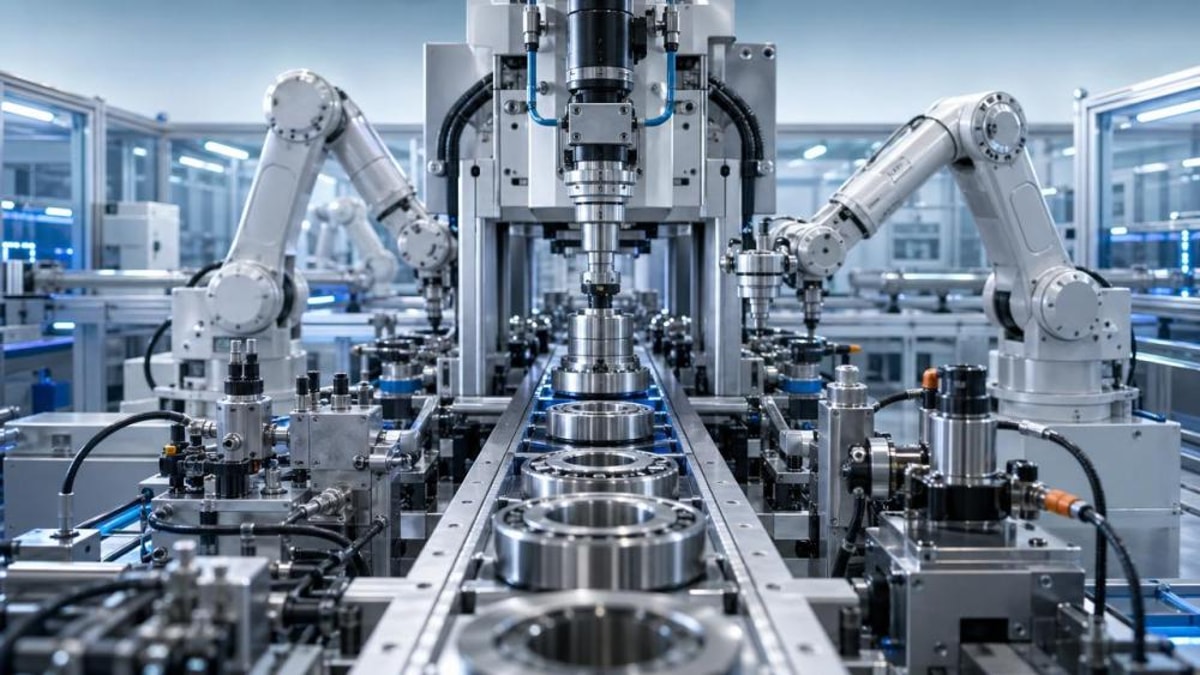
This trend is particularly relevant in environments involving bearings, chains, hydraulic valve blocks, linear motion assemblies, couplings, seals, and fluid control components. These systems often fail gradually before they fail visibly. A response delay of even a few hours can mean scrap, missed delivery, or accelerated wear across connected equipment.
Key trend signals on the factory floor
- Operators are receiving more actionable alarms instead of raw data overload.
- Maintenance is shifting from time-based intervention to condition-based response.
- Production teams are linking quality drift with machine behavior faster than before.
- Component-level intelligence is becoming part of broader line coordination.
What is driving the expansion of industrial intelligence
Several forces are pushing industrial intelligence into mainstream operations. First, manufacturing systems are more interconnected than before. A performance issue in one motion or fluid subsystem can affect multiple stations, making isolated troubleshooting too slow. Second, labor structures are changing. Experienced operators remain essential, but many factories also need tools that help newer users identify problems with less delay.
Third, component and material expectations are rising. High-performance bearings, maintenance-free chains, energy-efficient drives, and integrated hydraulic systems are designed for demanding duty cycles. To extract full value from these assets, factories need intelligence that tracks actual usage conditions rather than relying only on standard assumptions. Fourth, production resilience has become a board-level concern. Every plant now faces pressure to recover quickly from material shortages, demand shifts, and unplanned stoppages.
For a platform such as GPCM, this shift confirms why technical intelligence is no longer separate from business competitiveness. Material science, tribology, fluid dynamics, and commercial insight increasingly intersect on the shop floor, where response time determines whether a warning becomes a controlled correction or an expensive incident.
These drivers explain why industrial intelligence is being adopted not only in flagship smart factories, but also in practical retrofit scenarios where users simply need earlier warnings and clearer operating guidance.
How the impact is reaching operators, maintenance teams, and production planners
The strongest impact of industrial intelligence is not abstract. It changes how different people in a factory detect, interpret, and act on operational signals. For frontline users, the most immediate benefit is reduced uncertainty. Instead of reacting after noise, heat, leakage, or vibration become severe, they can intervene when trend deviations first appear.
For maintenance personnel, industrial intelligence improves prioritization. Not every alert deserves the same urgency, and not every component showing wear requires immediate replacement. Better data helps teams separate critical risk from acceptable variation. This is especially valuable in plants where spare parts planning, lubricant selection, and shutdown windows must be carefully managed.
Production planners also benefit because faster response at the equipment level reduces uncertainty in scheduling. When planners can trust that machine health and component condition are visible, they can make more realistic commitments on output, changeovers, and delivery timing.
Impact by role
Where the change is most visible
- Rotating equipment where bearing condition affects accuracy and uptime.
- Power transmission systems where chain, gearbox, or coupling wear changes output consistency.
- Hydraulic and fluid control systems where pressure instability creates process deviation.
- Automated assembly lines where one delayed station slows the entire flow.
The next stage is not more data, but better judgment at the point of use
A common misunderstanding is that industrial intelligence succeeds when factories collect more data. In reality, the next stage depends on better judgment. Operators do not need endless dashboards. They need to know what changed, how serious it is, what component or subsystem is likely involved, and what action should come next. The real value of industrial intelligence is therefore interpretive, not merely digital.
This is where precision manufacturing stands apart. In high-authority production environments, data quality, component context, and material behavior matter as much as software logic. A slight increase in friction, a lubrication inconsistency, or a valve response delay can mean very different things depending on the load pattern, tolerance requirement, and machine duty cycle. Without technical context, data can still lead to slow or incorrect action.
That is why intelligence platforms tied to domain expertise have strategic value. When industrial intelligence is informed by tribology, fluid dynamics, wear mechanisms, and component lifecycle behavior, factories gain decision support that is more relevant to real operating conditions.
Signals that deserve close monitoring in the next few years
Users and plant leaders should watch for several signals as this transition continues. First, diagnostic tools will become more component-aware, distinguishing between normal operating variation and performance decline tied to specific motion or fluid elements. Second, intelligence systems will increasingly connect maintenance events with production and quality results, helping users see which interventions create measurable benefit.
Third, suppliers and intelligence platforms will play a larger role in translating technical complexity into practical operating choices. This includes insight into materials, service life, lubrication behavior, replacement timing, and compatibility under changing process loads. Fourth, response speed will become part of procurement thinking. Buyers will not only compare price and specifications; they will also compare how well components and systems support condition visibility and low-friction maintenance decisions.
What better judgment looks like in practice
- An operator receives a prioritized alert rather than a generic warning.
- The alert links the issue to likely component behavior, not only machine location.
- The team can estimate operational risk before deciding whether to stop, slow, or continue.
- Maintenance action is recorded in a way that improves future response speed.
What factories should focus on now to benefit from industrial intelligence
The best response is not to pursue digital expansion everywhere at once. Factories should begin with the places where delayed reaction causes the highest cost or the greatest precision risk. In many plants, that means focusing on core motion systems, lubrication-sensitive equipment, hydraulic performance stability, and bottleneck stations that shape total line output.
For operators and users, adoption should also be practical. If tools are too complex, response speed may actually decline. The right approach is to combine clear shop-floor usability with deeper technical support in the background. Industrial intelligence should help users make faster first-line judgments while still giving engineers and managers enough depth for root-cause analysis.
Factories working with precision components and power transmission systems should also pay close attention to information quality from external partners. Reliable insight into wear trends, material performance, fluid behavior, and lifecycle trade-offs can strengthen not only maintenance strategy, but also inventory planning, specification choices, and supplier coordination.
A practical decision checklist
Final judgment for users and decision makers
The larger trend is clear: industrial intelligence is no longer just about digitizing factories. It is about compressing the time between signal, understanding, and action. That compression is becoming a defining advantage in manufacturing environments where uptime, tolerance control, and coordinated response directly affect business performance.
For frontline users, the benefit is a more manageable operating environment. For technical teams, it creates a stronger bridge between component behavior and production results. For industry platforms such as GPCM, it reinforces the value of combining technical depth with market-facing intelligence so that factories can respond not only faster, but also smarter.
If a company wants to judge how industrial intelligence may affect its own operations next, it should confirm a few practical questions: where response delays are most expensive, which precision components most influence line stability, whether current alerts truly support operator decisions, and how external technical intelligence can improve maintenance and procurement choices. Those answers will do more than explain the trend. They will determine who is prepared to move with it.
Related News
- How to Shortlist a Precision Engineering Supplier for Repeatable QualityMay 05, 2026Precision engineering supplier selection starts with repeatable quality. Learn how to shortlist vendors by tolerances, inspection, materials, and supply reliability.
- Evolutionary Trends in Precision Engineering: What Is Changing in Supplier CapabilitiesMay 05, 2026Evolutionary trends in precision engineering are redefining supplier capabilities—from tighter tolerances to smarter quality systems. Discover how to assess technical credibility and sourcing resilience.
- When Precision Manufacturing OEM Makes Sense Over In-House ProductionMay 05, 2026Precision manufacturing OEM makes sense when in-house production adds hidden cost, quality risk, or delays. Learn when outsourcing improves precision, speed, and project results.
- How to Compare a Precision Machining Manufacturer Without Missing Critical TolerancesMay 05, 2026Precision machining manufacturer comparison starts with critical tolerances, process control, and inspection proof. Learn how to reduce quality risk and choose a supplier with confidence.
Related News
- 00
0000-00
Industrial Automation Components Supplier: Key Compliance Checks Before Scaling Orders - 00
0000-00
How to Shortlist a Precision Engineering Supplier for Repeatable Quality - 00
0000-00
Evolutionary Trends in Precision Engineering: What Is Changing in Supplier Capabilities - 00
0000-00
When Precision Manufacturing OEM Makes Sense Over In-House Production - 00
0000-00
Hydraulic Valve Blocks for Precision Engineering: What Affects Service Life Most
Dr. Alistair Vaughn
Strategic Intelligence Center