





As procurement budgets tighten and supply chains remain volatile, tracking special steel components price shifts has become essential for financial decision-makers. This year, movements in alloy costs, trade policies, and manufacturing demand are reshaping cost structures across precision industries. For finance approvers, understanding these signals is key to controlling risk, improving budget accuracy, and securing long-term value in component sourcing.
For companies buying bearings, chains, valve blocks, shafts, couplings, and other precision assemblies, the issue is no longer just unit price. The bigger concern is total cost movement over 2–4 quarters, especially when special steel components are tied to alloy surcharges, machining complexity, heat treatment capacity, and regional freight instability. A 5% movement in material input can become a 9%–12% movement at the finished-component level when processing bottlenecks and scrap rates rise at the same time.
This matters directly to finance approvers. Capital planning, quarterly budget releases, supplier payment terms, and inventory carrying costs all depend on a realistic understanding of where special steel components pricing may head next. For readers following intelligence from GPCM, the value lies in turning technical market signals into clearer approval decisions, stronger sourcing controls, and better long-range cost discipline.
Why special steel components prices are moving differently this year
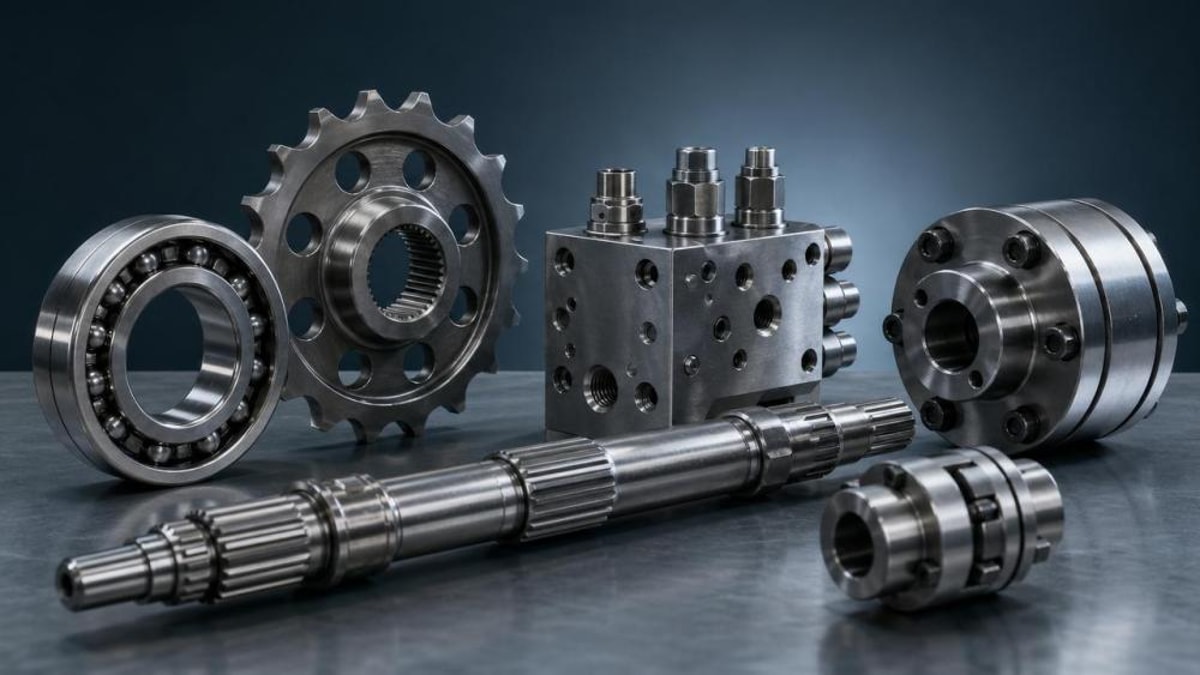
Not all industrial materials are moving in the same direction. Standard carbon steel may show moderate changes, while special steel components often react faster because their cost structure depends on tighter metallurgical inputs such as chromium, nickel, molybdenum, vanadium, and selected heat-treatment routes. In high-precision applications, these grades must also meet tolerances that can fall within ±0.01 mm to ±0.05 mm, which increases sensitivity to process yield and machine uptime.
Finance teams should also note that special steel components are affected by a layered supply chain. The first layer is raw steel or forged stock. The second is semi-finished processing, including turning, milling, grinding, and hardening. The third is final validation, which may involve dimensional inspection, surface integrity checks, and assembly matching. A disruption in any one of these 3 layers can push prices upward even if benchmark steel indices appear stable.
Another reason for price divergence is the return of uneven manufacturing demand. Automotive automation, food processing machinery, fluid power systems, and packaging lines are not recovering at the same speed. Some buyers are placing smaller but more frequent orders every 4–6 weeks, while others are rebuilding safety inventory for 8–12 weeks. This fragmented pattern creates planning inefficiency for mills and component manufacturers, which is often reflected in quotations.
Trade policies remain a visible pressure point as well. Import duties, quota shifts, and customs lead-time changes can add 7–20 days to inbound schedules for alloy material or forged blanks. For special steel components used in cross-border equipment projects, that delay does not only affect logistics cost. It can also trigger expedited machining, air freight conversion, and contract penalty exposure, all of which eventually appear in final approved spend.
Key cost drivers finance approvers should monitor
- Alloy input volatility, especially in grades requiring nickel or molybdenum-rich chemistry.
- Heat treatment capacity constraints, which can extend lead times from 10–15 days to 3–5 weeks.
- Scrap and yield losses in precision machining for high-hardness or thin-wall geometries.
- Freight and customs variability for internationally sourced blanks, bars, or forgings.
- Demand clustering from OEMs that place rush orders near quarter-end or project launch windows.
How GPCM intelligence adds value
For finance approvers, the advantage of a technical intelligence source such as GPCM is that it connects price movement to operational causes. Instead of seeing special steel components as a single spend line, buyers can separate material inflation from processing inflation, identify where lead-time premiums are likely to emerge, and decide whether a quote reflects true market conditions or temporary supplier stress.
The cost structure behind special steel components
A common approval mistake is to compare quotes only by unit price without understanding where the cost sits. In many precision parts, raw material may represent 35%–55% of total component cost, while machining, heat treatment, inspection, and finishing account for the rest. For highly engineered pieces such as hydraulic valve blocks or wear-resistant bearing races, process cost can exceed material cost, especially when rejection rates rise above 3%–5%.
This means raw steel price headlines alone are not enough. If a supplier’s grinding or hardening subcontractor is overloaded, the delivered price of special steel components may still increase even when alloy markets soften. Finance approvers therefore need a structured way to read quotations and validate whether cost increases are linked to inputs, routing complexity, or schedule compression.
The table below breaks down typical pricing elements that influence precision industrial components. These are not fixed percentages for every product, but they provide a practical framework for budget review and supplier negotiation.
The key takeaway is that special steel components pricing behaves like a combined technical-and-logistics equation. A supplier offering a low material rate can still become expensive if they require frequent split shipments, repeated requalification, or a 20% deposit without lead-time reliability. Financial approvals are stronger when cost review includes both price composition and delivery confidence.
Three approval questions worth asking
- What portion of the quote increase comes from raw special steel, and what portion comes from processing or logistics?
- Has the supplier changed heat treatment route, inspection scope, or lot size assumptions compared with the prior order?
- Will the quoted lead time hold if demand increases by 15%–20% over the next quarter?
Budget planning implication
For quarterly forecasting, a practical method is to model 3 scenarios: stable input cost, moderate increase of 5%–8%, and stressed increase of 10%–15%. This approach helps finance teams avoid under-approving spend when special steel components are part of critical equipment uptime. It also creates room to evaluate whether larger batch releases or framework agreements could reduce volatility.
How finance approvers can evaluate supplier quotes more accurately
When multiple suppliers submit quotations for special steel components, the cheapest number is often not the lowest financial risk. One quote may assume a 6-week lead time, another may assume 3 weeks with premium furnace capacity, and a third may exclude final coating or packaging. Without normalizing these assumptions, finance approvers may approve a lower headline price that later converts into extra charges, delayed production, or unplanned stock buys.
A better approach is to compare offers through four lenses: price basis, lead-time credibility, quality assurance burden, and working-capital impact. These four dimensions translate technical sourcing decisions into financial language and reduce the chance of hidden cost transfer from procurement into operations or after-sales support.
The following table can be used as a practical review tool during approval meetings for bearings, chain systems, shafts, valve bodies, and other precision assemblies based on special steel components.
This kind of quote normalization often reveals that a 3% price gap can be less important than a 2-week difference in confirmed lead time or a missing inspection package. For critical production lines, one delayed batch of special steel components may create a downstream cost much greater than the apparent purchase saving.
A practical approval checklist
- Request the alloy grade and process route in writing before approving price changes above 5%.
- Compare standard lead time versus expedited lead time, and assign a cost to each option.
- Review whether packaging, anti-corrosion treatment, and export documents are included.
- Confirm the rework or replacement responsibility if dimensional or hardness nonconformity appears.
- Ask procurement to model landed cost, not only ex-works or FOB price.
Where finance and engineering should align
Special steel components sit at the intersection of metallurgy, tolerance control, and equipment reliability. Finance teams do not need to become material scientists, but they do need enough visibility to challenge unexplained surcharges and to recognize when a higher quote may actually protect uptime, warranty cost, and project delivery commitments.
Risk control strategies for budgets, contracts, and inventory
Price volatility does not always require a defensive purchasing freeze. In many cases, better contract structure and inventory policy can reduce exposure more effectively than waiting for the market to soften. For finance approvers dealing with special steel components, the main goal is to convert uncertainty into manageable bands rather than assume one fixed annual price.
One useful tactic is segmenting parts into three categories: mission-critical components with zero downtime tolerance, operationally important parts with short substitution windows, and noncritical items suitable for flexible replenishment. This classification helps determine which items should be covered by quarterly agreements, which can move to call-off ordering, and which can be sourced tactically based on spot conditions.
For many manufacturers and distributors, safety stock targets of 4–8 weeks are now more practical than the older 2–3 week model for selected special steel components. That does not mean carrying excess inventory across all SKUs. It means protecting only the parts with long remanufacture cycles, restricted material grades, or high line-stop cost. Finance teams can support this by linking inventory decisions to downtime economics rather than pure warehouse metrics.
Four contract measures worth considering
- Set a price review window every 60–90 days rather than accepting open-ended adjustments.
- Define which cost triggers are valid, such as alloy movement beyond a pre-agreed threshold.
- Separate expedited delivery fees from standard pricing to expose rush-order cost clearly.
- Include lot traceability and nonconformity response timing, such as 48–72 hour containment feedback.
Common approval mistakes
A frequent mistake is locking annual pricing on a narrow specification without confirming volume commitment and delivery cadence. Another is approving low-cost suppliers for special steel components without checking subcontract dependence for hardening or grinding. In stressed markets, outsourced process steps become the first source of delay. A third mistake is ignoring the cost of internal reinspection when supplier documentation is incomplete.
A simple risk framework
- Low risk: stable grade, repeat geometry, lead time under 3 weeks, multiple approved suppliers.
- Medium risk: alloy-sensitive grade, lead time 4–6 weeks, partial subcontract processing.
- High risk: imported material dependency, tolerance-critical design, lead time above 8 weeks, single-source tooling.
Using this framework allows financial approval to become more selective. Instead of pushing every purchase order through the same rule set, teams can prioritize deeper review only where special steel components carry the highest price, continuity, or quality risk.
What to expect in the next two to three quarters
Looking ahead, the most likely pattern is not a uniform rise or fall but periodic shifts by grade, process route, and application segment. Special steel components used in wear-heavy, corrosion-sensitive, or pressure-bearing environments may remain firmer in price than general machine parts because buyers are less willing to substitute materials or relax specifications. Components for automated lines may also carry a premium if OEM demand stays concentrated in short windows.
Finance approvers should watch three indicators over the next 2–3 quarters. First, alloy-intensive raw material movement, especially where mills tighten production. Second, lead-time changes in hardening, finishing, and precision grinding. Third, renewed trade-policy friction that affects imported semifinished stock. Even if each factor moves only modestly, the combined effect on special steel components can still reach the high single digits.
For companies with recurring demand, this is a strong time to build a rolling forecast with monthly updates rather than rely on one annual assumption. A simple 90-day review rhythm can improve budget accuracy, identify when to place forward orders, and prevent quarter-end panic buying. It also gives procurement, engineering, and finance a common discussion structure grounded in measurable signals.
FAQ for finance approvers
How often should special steel components pricing be reviewed?
For high-value or alloy-sensitive categories, every 30–60 days is reasonable. For stable, repeat-purchase items with broad supply options, a 90-day review cycle may be enough. The right interval depends on lead time, order frequency, and how much of the total quote is tied to raw material versus processing.
When does a price increase deserve escalation?
A practical trigger is any increase above 5% without a documented breakdown. If the supplier cannot separate material, machining, heat treatment, and logistics effects, finance should request clarification before approval. For critical special steel components, even a 3% change may require review if annual spend is high.
Is it better to buy more now or wait?
That depends on stock risk and line-stop cost. If lead time has expanded from 3 weeks to 7 weeks and the part is critical, selective forward buying may make sense. If the component is noncritical and widely available, flexible purchasing is usually safer than building excess inventory.
What is the most overlooked cost in approvals?
The most overlooked cost is often disruption cost rather than purchase price. A low quote for special steel components can become expensive if it causes emergency freight, line delay, field replacement, or repeated incoming inspection. These costs are rarely visible on the original PO but often exceed the apparent saving.
For financial decision-makers, the priority this year is not to predict every short-term fluctuation perfectly. It is to create a stronger approval process around special steel components by linking price signals to metallurgy, process capacity, logistics exposure, and operational criticality. That is where cost control becomes more reliable and less reactive.
GPCM supports that approach by translating sector news, material trends, and precision manufacturing dynamics into decision-ready intelligence for industrial buyers, distributors, and manufacturers. If your team needs a clearer view of component cost movement, sourcing risk, or long-term supply strategy, contact us to discuss your requirements, request tailored insight, or explore more precision component solutions.
Related News
- Motion Control Systems Price Trends: What Is Driving Cost Changes in 2026May 05, 2026Motion control systems price trends in 2026 are driven by material volatility, precision upgrades, software integration, and supply risk. Learn what impacts costs and how to buy smarter.
- Special Steel Prices in 2026: What Is Driving Cost VolatilityMay 04, 2026Special steel prices in 2026 are shifting fast. Discover what drives volatility, how to assess supplier quotes, and ways to reduce procurement risk with smarter buying decisions.
- Special steel components price shifts to watch this yearApr 30, 2026Special steel components price shifts are reshaping budgets this year. Learn the key cost drivers, supplier risks, and forecasting tactics finance teams need to control spend and approve smarter.
- Are high-performance composite materials worth the price?Apr 30, 2026High-performance composite materials: are they worth the price? Discover how they reduce lifecycle cost, downtime, and maintenance while improving ROI in demanding industrial applications.
Related News
- 00
0000-00
Industrial Automation Components Supplier: Key Compliance Checks Before Scaling Orders - 00
0000-00
How to Shortlist a Precision Engineering Supplier for Repeatable Quality - 00
0000-00
Evolutionary Trends in Precision Engineering: What Is Changing in Supplier Capabilities - 00
0000-00
When Precision Manufacturing OEM Makes Sense Over In-House Production - 00
0000-00
Hydraulic Valve Blocks for Precision Engineering: What Affects Service Life Most
Optical Mech Engineer
Strategic Intelligence Center