





Are high-performance composite materials worth the price? For financial decision-makers, the answer depends on total lifecycle value, not just upfront cost. In industries where durability, weight reduction, corrosion resistance, and maintenance efficiency directly affect ROI, high-performance composite materials can deliver measurable long-term savings. This article examines whether their premium price is justified through performance, risk reduction, and strategic cost advantages.
For approval teams, the real question is not whether composites cost more at purchase, but whether they reduce the total cost of ownership over 3, 5, or even 10 years. In precision manufacturing, motion systems, fluid control assemblies, and power transmission applications, material choice affects downtime, replacement cycles, lubrication needs, freight cost, and even energy draw.
That is why high-performance composite materials increasingly appear in discussions around bearings, chains, valve components, housings, wear surfaces, and corrosion-prone mechanical parts. For readers evaluating budgets through a finance lens, the decision must be anchored in cash flow impact, risk exposure, and measurable operating gains rather than material price alone.
Why purchase price alone is the wrong benchmark
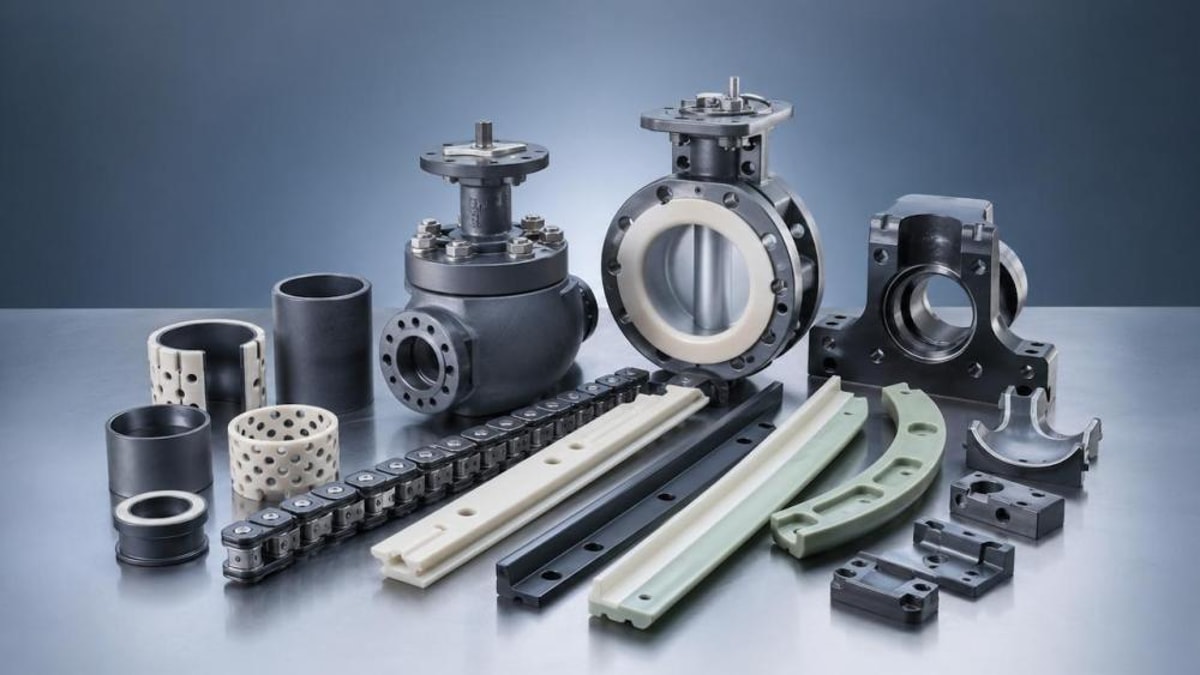
In many industrial sourcing reviews, metal remains the default reference because it is familiar, widely specified, and often cheaper per kilogram. However, high-performance composite materials are rarely bought to win a raw material price comparison. They are selected to solve a cost problem that appears later in the asset lifecycle, such as wear, corrosion, excess mass, noise, lubrication demand, or repeated maintenance shutdowns.
For financial approvers, a better benchmark is lifecycle cost across at least 4 dimensions: acquisition, operation, maintenance, and failure risk. A component that costs 20% to 80% more upfront may still be the lower-cost option if it extends service life by 2x, cuts maintenance visits by 30% to 50%, or reduces unplanned stoppages in production cells that run 16 to 24 hours per day.
This issue is especially relevant in sectors that rely on precision components and motion control. A low-cost material in a bearing seat, guide element, or valve support can trigger tolerance drift, contamination, or premature wear. Once downtime, labor, and lost output are included, the original savings often disappear within 6 to 18 months.
Where finance teams should look beyond unit cost
A practical review should include more than supplier quotation sheets. Teams should compare expected operating hours, replacement frequency, lubrication intervals, corrosion exposure, and logistics cost per installed unit. In many cases, the hidden cost drivers are not in procurement records but in maintenance logs and production interruption reports.
- Replacement cycle: Does the part last 12 months or 36 months under actual load and temperature?
- Maintenance burden: Does it require weekly lubrication, quarterly adjustment, or annual shutdown service?
- Failure consequence: Is the part non-critical, or can a single failure stop a line worth thousands per hour?
- System effect: Does lower weight reduce motor load, shipping cost, or installation labor?
When these variables are quantified, high-performance composite materials often move from “premium purchase” to “capital efficiency tool.” That framing matters for CFOs, controllers, and budget approvers who need to justify spending with a clear payback path.
Where high-performance composite materials create measurable economic value
The strongest economic case for high-performance composite materials appears where industrial parts face repeated friction, aggressive media, or weight constraints. Examples include dry-running bearings, conveyor wear strips, hydraulic support elements, chemical handling assemblies, and corrosion-sensitive outdoor equipment. In these cases, composites are not cosmetic upgrades; they change maintenance economics.
Weight reduction is one of the most overlooked benefits. A component that is 25% to 60% lighter than a metal alternative may reduce freight charges, simplify installation, and lower inertia in moving assemblies. Across automated equipment with high cycle counts, that can contribute to reduced energy demand and less stress on motors, shafts, and support structures.
Corrosion resistance is another major driver. In washdown, marine, food, chemical, or humid environments, metal components may need coatings, regular inspection, or early replacement. High-performance composite materials can reduce those recurring costs while also lowering contamination risk from rust, degraded lubrication, or flaking surface treatment.
Typical value drivers in industrial applications
The table below shows how financial value often appears in real procurement decisions. The numbers are not universal guarantees, but they reflect common evaluation ranges used in industrial sourcing and engineering reviews.
For finance teams, the key lesson is simple: the premium is justified when composites replace recurring cost, not when they merely replace a material. That distinction separates a strategic buy from an expensive specification choice.
Best-fit scenarios
- Equipment operating in corrosive, wet, or washdown conditions for more than 2 shifts per day.
- Motion assemblies where lower mass improves acceleration, handling safety, or transport cost.
- Remote or hard-to-service installations where each maintenance visit has a high labor multiplier.
- Precision systems where stable friction and dimensional consistency reduce secondary wear.
In these use cases, high-performance composite materials become easier to justify because the financial upside is visible in maintenance budgets, uptime metrics, and asset reliability rather than in abstract engineering claims.
How to calculate ROI without oversimplifying the business case
A strong internal approval case should use a structured ROI model rather than a generic “better performance” statement. The recommended review period is usually 24 to 60 months, depending on the equipment life and replacement cycle. This captures recurring costs that are invisible in first-cost comparisons, particularly in high-usage environments.
At minimum, the model should include the installed unit price, expected service life, downtime cost per event, maintenance hours, consumables, scrap exposure, and logistics. For parts used in precision manufacturing systems, it is also useful to include tolerance-related quality loss if material instability can affect output consistency.
The goal is not to create a perfect forecast. It is to compare two or three realistic scenarios with enough operational detail to support capital discipline. Even a simple model often reveals that a 30% higher purchase price is economically favorable if it avoids one major stoppage or one early replacement cycle.
A practical 5-step finance review
- Define the duty cycle: load, temperature, speed, media exposure, and target operating hours.
- Estimate current cost: part price, labor per replacement, lubrication, and average failure frequency.
- Model the composite option over 2, 3, and 5 years rather than only year 1.
- Assign a value to downtime, quality risk, and inventory carrying cost.
- Approve by payback threshold, such as under 18 months or under 24 months for non-critical assets.
The following comparison framework is useful when teams need a board-ready summary for material substitution decisions.
A disciplined ROI case should also separate critical and non-critical components. Finance teams should not approve premium materials everywhere. The best returns usually come from the 10% to 20% of components that create 60% to 80% of maintenance disruption or replacement complexity.
Selection risks, misjudgments, and how to avoid paying for the wrong composite
Not every composite upgrade is justified. High-performance composite materials can be overpriced if the application is low-stress, easy to replace, or already well served by standard metals or engineering plastics. The cost advantage appears only when the material properties match the actual operating profile.
One common mistake is approving a material change based on one feature, such as corrosion resistance, while ignoring load, temperature, creep, or mating surface behavior. Another is relying on laboratory claims without asking how the part performs under real duty cycles, contamination, shock loading, or start-stop conditions common in industrial motion systems.
Financial approvers should require a selection process that translates engineering language into commercial risk. The right question is not “Is this composite advanced?” but “Which risk does it remove, what cost does it reduce, and under what operating envelope?”
Four approval filters that prevent poor material investments
- Load and temperature fit: Confirm operating loads, peak loads, and thermal range rather than average conditions only.
- Interface compatibility: Check shaft finish, counterface hardness, fluid exposure, and dimensional tolerance stack-up.
- Service economics: Validate whether maintenance labor or downtime savings exceed the upfront premium within 12 to 24 months.
- Supply continuity: Review lead time, MOQ, and dual-source options for strategic parts in global supply chains.
Questions worth asking suppliers or technical advisors
Ask for performance boundaries, not just general benefits. Useful inputs include pressure-velocity limits, moisture behavior, dimensional stability, expected wear pattern, and maintenance assumptions. If a supplier cannot explain the failure mode, the finance team is being asked to accept uncontrolled risk.
This is where technical intelligence platforms such as GPCM become valuable. In precision manufacturing markets, decision quality improves when material selection is informed by tribology, fluid dynamics, commercial demand patterns, and component lifecycle trends instead of isolated catalog claims. That cross-functional perspective is often what turns a material premium into a defendable strategic decision.
How finance leaders can build a stronger approval framework
A repeatable approval framework is more useful than one-off technical debates. When organizations evaluate high-performance composite materials across multiple plants or product lines, they need a standard review structure that engineering, procurement, maintenance, and finance can all follow. This reduces delays and improves consistency in capital and operating expense decisions.
The most effective framework usually combines 4 inputs: application criticality, cost of downtime, maintenance frequency, and supply risk. A composite component should move faster through approval when at least 2 of those factors are high. If all 4 are low, a lower-cost standard solution may remain the better commercial choice.
This approach works particularly well in sectors tied to motion control, power transmission, and fluid handling, where minor parts can create disproportionate operational impact. A valve subcomponent, bearing liner, chain guide, or wear insert may represent less than 2% of assembly cost but influence reliability far beyond its invoice value.
Recommended internal scorecard
Using this scorecard, finance leaders can rank opportunities instead of debating each request from zero. In practice, this makes it easier to approve the right high-performance composite materials in the applications where they create the highest return and the clearest risk reduction.
FAQ for financial decision-makers
How quickly should a composite upgrade pay back?
For non-critical components, many companies look for payback within 12 to 24 months. For high-risk applications tied to uptime or contamination control, longer payback windows of 24 to 36 months may still be justified if the failure consequence is severe.
Are high-performance composite materials only suitable for advanced equipment?
No. They are often most effective in ordinary but difficult operating environments, such as wet conveyors, corrosive washdown zones, dry-running wear points, and remote service locations. The key is not machine sophistication; it is whether the material removes recurring cost or risk.
What should procurement request before approval?
Request service-life assumptions, operating limits, maintenance implications, and lead-time guidance. A credible proposal should explain the application envelope, expected replacement interval, and where the savings will appear in labor, uptime, or part consumption.
High-performance composite materials are worth the price when they reduce measurable lifecycle cost, improve reliability, and protect operations from recurring maintenance or corrosion-driven losses. They are not automatically the best choice for every component, but they often outperform lower-cost materials in the applications that matter most to uptime, quality, and long-term asset economics.
For financial approvers, the smartest path is to evaluate these materials through a structured ROI framework supported by technical evidence, supply chain visibility, and realistic duty-cycle assumptions. GPCM helps decision-makers connect precision component intelligence with commercial judgment across power transmission, fluid control, and advanced manufacturing environments.
If you are assessing whether high-performance composite materials fit your cost, reliability, or sourcing targets, now is the right time to review the application in detail. Contact us to explore technical comparisons, obtain a tailored evaluation framework, or learn more solutions for precision industrial components and motion systems.
Related News
- Motion Control Systems Price Trends: What Is Driving Cost Changes in 2026May 05, 2026Motion control systems price trends in 2026 are driven by material volatility, precision upgrades, software integration, and supply risk. Learn what impacts costs and how to buy smarter.
- Special Steel Prices in 2026: What Is Driving Cost VolatilityMay 04, 2026Special steel prices in 2026 are shifting fast. Discover what drives volatility, how to assess supplier quotes, and ways to reduce procurement risk with smarter buying decisions.
- Special steel components price shifts to watch this yearApr 30, 2026Special steel components price shifts are reshaping budgets this year. Learn the key cost drivers, supplier risks, and forecasting tactics finance teams need to control spend and approve smarter.
- Are high-performance composite materials worth the price?Apr 30, 2026High-performance composite materials: are they worth the price? Discover how they reduce lifecycle cost, downtime, and maintenance while improving ROI in demanding industrial applications.
Related News
- 00
0000-00
Industrial Automation Components Supplier: Key Compliance Checks Before Scaling Orders - 00
0000-00
How to Shortlist a Precision Engineering Supplier for Repeatable Quality - 00
0000-00
Evolutionary Trends in Precision Engineering: What Is Changing in Supplier Capabilities - 00
0000-00
When Precision Manufacturing OEM Makes Sense Over In-House Production - 00
0000-00
Hydraulic Valve Blocks for Precision Engineering: What Affects Service Life Most
Optical Mech Engineer
Strategic Intelligence Center