





As trade policies, energy costs, and component reliability become more tightly linked, the power value chain is reshaping how exporters assess markets, suppliers, and long-term risk. For business evaluation professionals, understanding these shifts is no longer optional—it is essential to making smarter export decisions, protecting margins, and identifying where technical capability creates a lasting competitive edge.
Why export decisions are being redefined by the power value chain
The biggest change is not simply higher costs or tougher compliance. It is the growing interdependence between energy availability, industrial components, logistics resilience, and market access. In practical terms, the power value chain now reaches beyond electricity generation or transmission. It affects how manufacturers source bearings, hydraulic assemblies, chains, motion systems, castings, specialty steels, and other precision inputs that determine whether export promises can actually be kept.
For business evaluation teams, this means traditional export screening models are no longer sufficient. A market that looks attractive on demand, tariffs, and pricing may still be high-risk if its supply base depends on unstable power costs, constrained materials, or weak maintenance ecosystems. Likewise, a supplier that once competed mainly on unit price may now win because it delivers stable uptime, energy efficiency, and traceable component performance across the power value chain.
This shift matters across industries because power-linked disruption now travels quickly. A spike in energy-intensive steel processing, a change in grid stability, or stricter cross-border sustainability rules can alter lead times, total landed cost, warranty exposure, and customer confidence. Export decisions are therefore becoming less about lowest purchase price and more about operational certainty.
Key trend signals business evaluators should not ignore
- Energy cost volatility is influencing the competitiveness of component-heavy exports.
- Buyers increasingly evaluate lifecycle reliability, not only initial procurement price.
- Trade and localization rules are pushing exporters to rethink regional sourcing patterns.
- Downtime risk in automated equipment is making technical documentation and quality traceability more valuable.
- Carbon visibility and material efficiency are starting to shape preferred supplier lists.
A broader definition of export readiness
A company may have solid production capacity, but if it cannot demonstrate stable sourcing, component endurance, and acceptable energy exposure, its export readiness is weaker than it appears. In this environment, the power value chain has become a practical filter for deciding which products, markets, and partnerships deserve priority.
What is driving the shift in the power value chain
Several forces are acting at the same time. None of them alone explains the change, but together they are forcing exporters to redesign how they evaluate opportunity and risk. The strongest drivers sit at the intersection of energy economics, technical reliability, trade policy, and industrial modernization.
First, energy is no longer a background cost. It directly affects the economics of heat treatment, forging, machining, fluid power manufacturing, and advanced material processing. When these costs become unstable, the competitiveness of finished products can shift by region even if wage levels remain unchanged.
Second, export customers are less tolerant of performance inconsistency. In many sectors, especially automated production and process-intensive operations, the cost of component failure exceeds the savings from low-cost sourcing. This changes the value of tribological performance, sealing integrity, fatigue life, corrosion resistance, and maintenance intervals.
Why technical intelligence is becoming commercially decisive
As the power value chain becomes more complex, exporters need better technical intelligence, not just better sales forecasts. Platforms such as GPCM matter in this context because decision quality now depends on understanding material constraints, lubrication behavior, fluid control performance, and the evolution of core industrial components. These factors increasingly shape cost resilience and export suitability.
When a buyer compares two similar offers, the exporter with clearer data on component longevity, maintenance needs, and performance under variable operating loads often has the stronger position. Technical evidence turns into commercial trust, and commercial trust influences export approval, vendor retention, and pricing power.
How the power value chain is affecting different export stakeholders
The impact is not uniform. Different functions inside the export process feel the change in different ways. Business evaluation professionals should avoid one-size-fits-all assumptions and instead map where the power value chain creates pressure, opportunity, or blind spots.
Manufacturers face the most immediate cost and delivery consequences. If their component ecosystem is exposed to unstable steel supply, machining energy costs, or hydraulic subsystem delays, promised export schedules may erode quickly. Distributors face a different challenge: they must explain value in a market where customers increasingly ask for technical assurance, not just discounting.
End users and OEM buyers are also changing behavior. They are more likely to compare total operating value, spare-part continuity, and maintenance predictability. This makes reliable motion and power transmission systems more important in commercial evaluations than before.
Stakeholder impact overview
The rising value of precision components
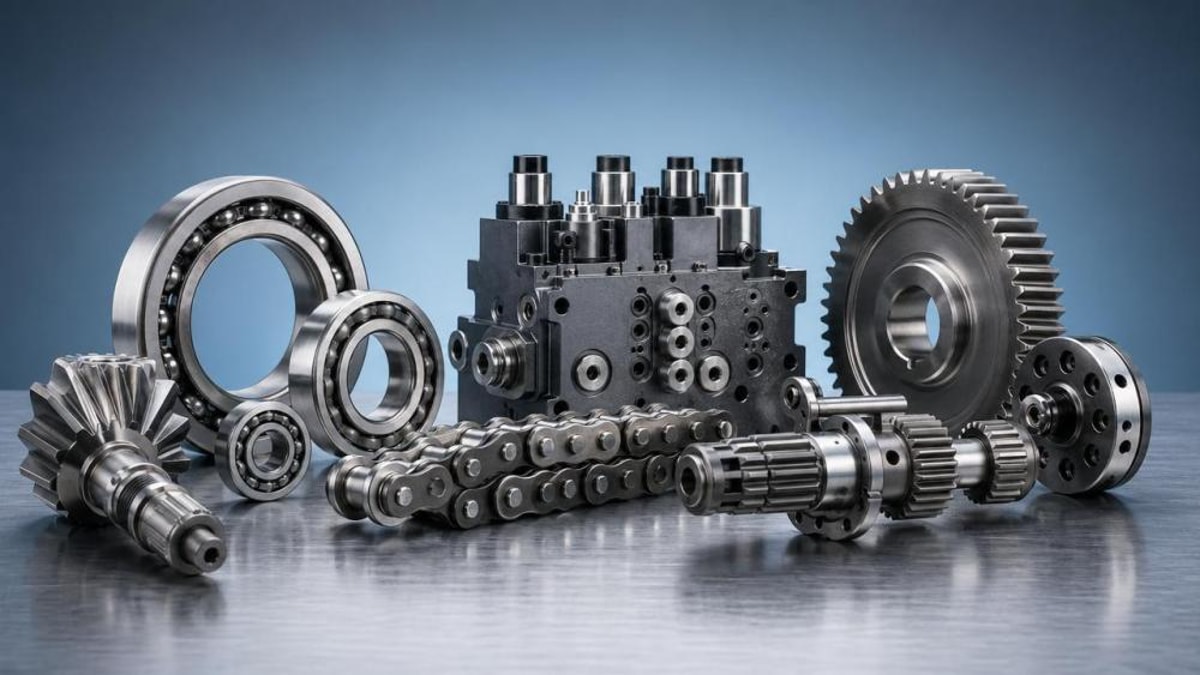
One notable trend is the strategic elevation of core industrial components. Bearings, seals, couplings, chains, valve blocks, and fluid control elements used to be treated as sourcing details. Now they are often recognized as decision-critical assets because they affect energy efficiency, equipment stability, maintenance planning, and export credibility. In many bids, the quality of these components shapes the buyer’s view of the entire system.
What smart evaluators should examine before approving export expansion
A useful response is not to become more conservative across the board. It is to become more selective and better informed. The power value chain does not eliminate export opportunity; it changes how opportunity should be screened. Companies that adapt their evaluation criteria can still expand successfully while avoiding avoidable exposure.
Start by testing whether cost competitiveness is structural or temporary. If a product wins only under short-term energy conditions, its export case may weaken quickly. Then assess whether critical components have validated performance under real operating conditions, especially where service interruptions are expensive. Finally, check whether the supplier network can remain stable under policy or logistics disruption.
The goal is to connect commercial assumptions with technical and operational evidence. This is where deeper intelligence on precision manufacturing, motion systems, and fluid control technologies becomes highly valuable.
A practical evaluation checklist
- Map energy-sensitive processes in the product’s manufacturing route.
- Identify which components are most likely to affect uptime, maintenance, or warranty claims.
- Review supplier concentration and substitution feasibility for critical materials and parts.
- Check how target markets evaluate traceability, sustainability, and technical certification.
- Compare short-term price appeal with long-term reliability performance.
Questions that reveal hidden export risk
Can the supplier explain why its component design reduces friction, wear, or fluid loss? Is there evidence of stable tolerances under demanding loads? Does the export proposition depend on one energy-intensive upstream source? Are there alternative regional supply options if trade conditions change? These questions often uncover whether a promising deal is truly robust within the power value chain.
Signals to watch over the next phase of change
Looking ahead, export decisions will likely become even more tied to measurable performance and strategic resilience. The power value chain is moving toward a model where efficient design, lower friction, longer service life, and recyclable material choices influence market access as much as production scale does.
Business evaluation professionals should track not only macro indicators such as energy pricing or trade restrictions, but also technical signals. These include changes in preferred bearing materials, adoption of maintenance-free chain systems, demand for integrated hydraulic blocks, and customer requests for lifecycle documentation. Such signals often appear before broader commercial shifts become obvious.
This is also where high-authority intelligence sources gain importance. A platform focused on underlying industrial components can help teams see where the next export advantage is emerging: not just in lower cost, but in precision, endurance, and system efficiency that align with the future direction of the power value chain.
Decision signals worth monitoring continuously
- Regional changes in energy-intensive manufacturing costs
- Shifts in buyer preference toward low-maintenance, long-life components
- Policy updates affecting sourcing origin and cross-border compliance
- Requests for stronger material traceability and recyclability data
- Evidence that technical differentiation is improving bid conversion
Turning trend insight into better export judgment
The central lesson is clear: the power value chain is no longer a background concept for engineers alone. It has become a live commercial framework for export selection, supplier assessment, and strategic positioning. Companies that continue to evaluate foreign opportunities using narrow pricing logic may misread both risk and value.
For business evaluation professionals, the better path is to combine market analysis with component intelligence, energy exposure review, and reliability evidence. That approach supports stronger margin defense, more realistic market prioritization, and better conversations with both suppliers and buyers.
If a company wants to judge how the power value chain will affect its own export strategy, it should confirm a few essentials first: which products are most sensitive to energy and material volatility, which components most strongly affect customer uptime, which markets reward technical credibility, and which supply relationships can remain dependable under change. Those answers are often the difference between temporary export activity and durable international growth.
Related News
- International Trade Quotas and Export Planning: Where Delays Usually StartMay 05, 2026International trade quotas often cause delays before shipping begins. Learn how forecasting, supplier alignment, and customs readiness shape smarter export planning.
- Precision Component Manufacturing for Medical Devices: Export Risks to WatchMay 04, 2026Precision component manufacturing for medical devices involves export risks in compliance, traceability, trade controls, and supplier quality. Learn what to assess before margins slip.
- How global supply chain intelligence changes sourcing decisionsApr 30, 2026Global supply chain intelligence helps buyers compare suppliers beyond price, reduce sourcing risk, improve compliance, and build more resilient procurement strategies.
- How the power value chain is changing export decisionsApr 30, 2026Power value chain shifts are redefining export decisions. Discover how energy costs, reliability, and sourcing risks shape smarter market choices and stronger margins.
Related News
- 00
0000-00
Industrial Automation Components Supplier: Key Compliance Checks Before Scaling Orders - 00
0000-00
How to Shortlist a Precision Engineering Supplier for Repeatable Quality - 00
0000-00
Evolutionary Trends in Precision Engineering: What Is Changing in Supplier Capabilities - 00
0000-00
When Precision Manufacturing OEM Makes Sense Over In-House Production - 00
0000-00
Hydraulic Valve Blocks for Precision Engineering: What Affects Service Life Most
Ms. Elena Rodriguez
Strategic Intelligence Center