





In today’s volatile industrial landscape, global supply chain intelligence is no longer optional for sourcing teams evaluating precision components and motion systems. For business assessment professionals, it turns fragmented market signals, technical risks, and cost pressures into clearer supplier decisions. This article explores how intelligence-led sourcing improves resilience, supports compliance, and helps buyers identify long-term value in highly specialized global manufacturing networks.
Why does global supply chain intelligence matter more in precision sourcing?
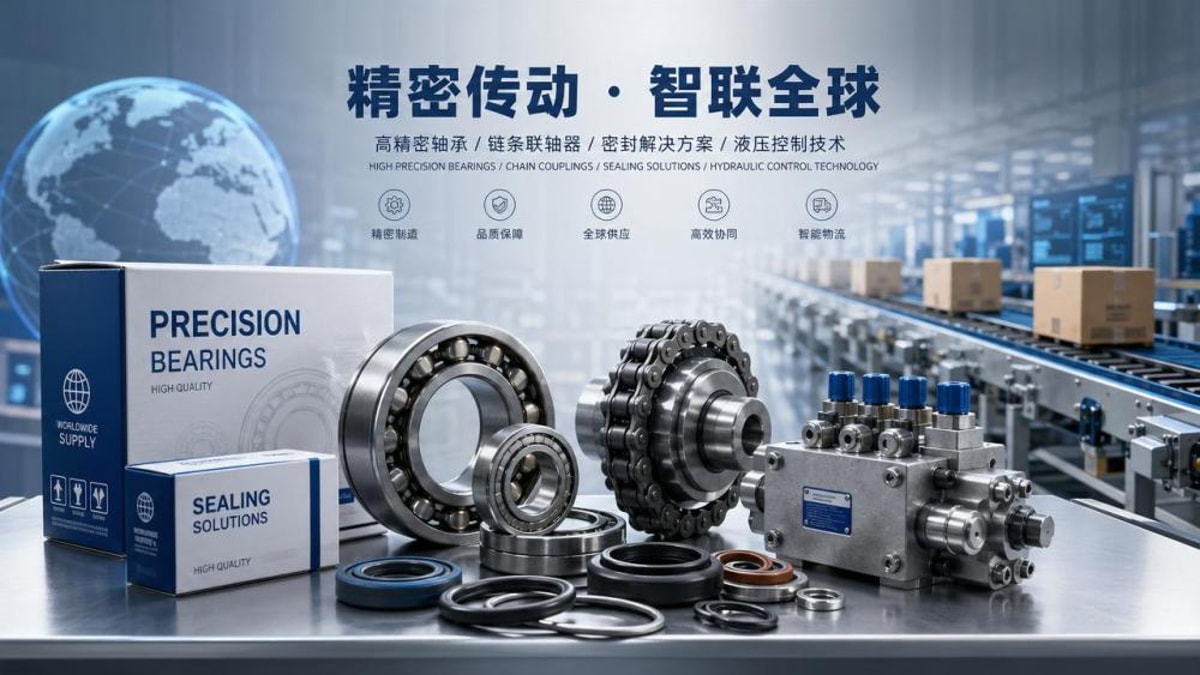
When buyers source bearings, chains, couplings, seals, valve blocks, or other precision power transmission and fluid control components, the sourcing challenge rarely stops at price. A part that appears acceptable on paper can still create downstream losses through tolerance drift, material inconsistency, unstable lead times, or incomplete documentation. This is where global supply chain intelligence changes the quality of decision-making.
For business assessment professionals, the value of global supply chain intelligence lies in connecting commercial and technical signals. Instead of reviewing suppliers only by quotations and delivery promises, teams can compare raw material exposure, export sensitivity, process maturity, probable maintenance intervals, and the supplier’s position inside a multi-tier manufacturing network. In many industrial categories, a 2–4 week delay in a critical component can disrupt an entire project schedule.
This is especially important in cross-border procurement of high-precision components, where the visible supplier may not control every upstream variable. Heat treatment subcontracting, special steel sourcing, surface finishing quality, and logistics route volatility all affect final performance. Without structured intelligence, evaluation teams often discover these risks only after samples fail, warranty claims rise, or replenishment becomes erratic.
GPCM addresses this gap by combining industrial component expertise with strategic market observation. Its Strategic Intelligence Center tracks practical variables such as special steel price movement, trade quota changes, and technology evolution in areas like composite bearings, maintenance-free chains, and integrated hydraulic valve blocks. For procurement review teams, that means better supplier screening before contracts are signed, not after supply problems appear.
What sourcing decisions improve when intelligence is available?
- Supplier qualification becomes more evidence-based because buyers can review manufacturing depth, process consistency, and likely dependency on single-source raw materials.
- Cost analysis becomes more realistic because teams can separate temporary price advantages from hidden logistics, compliance, and maintenance costs over 12–24 months.
- Risk planning becomes more proactive because lead-time vulnerability, route instability, and technical substitution options can be discussed before a disruption occurs.
- Executive reporting improves because sourcing recommendations are easier to defend when they are tied to measurable criteria rather than vendor claims alone.
Which evaluation signals should business assessment teams track?
Many procurement reviews fail because they overemphasize unit price and underweight technical-commercial fit. In precision manufacturing supply chains, three categories usually matter most: product integrity, supply continuity, and total acquisition efficiency. A supplier may perform strongly in one category and remain risky in the other two. Global supply chain intelligence helps teams balance all three instead of defaulting to the cheapest quote.
The first category is product integrity. Assessment teams should examine tolerance capability, material traceability, process repeatability, and documentation discipline. For industrial motion components, the difference between nominal compliance and stable batch consistency can determine whether service life aligns with maintenance planning. Even a small variation such as surface roughness or seal material mismatch can shorten intervals from 18 months to less than 12 months in demanding duty cycles.
The second category is supply continuity. Buyers should understand whether the supplier relies on one mill, one machining partner, one coating source, or one export route. Lead times of 7–15 days for standard items may expand to 4–8 weeks if upstream steel, forgings, or transport capacity tightens. Intelligence-led sourcing identifies these weak points early and supports dual-source or substitute planning where justified.
The third category is total acquisition efficiency. This includes not only purchase price, but also quality inspection effort, packaging suitability, customs document readiness, after-sales response time, and replacement risk. For assessment professionals, the key question is simple: will the lower quote still be the lower cost after quality checks, schedule buffers, and in-service reliability are considered?
The table below summarizes a practical review framework that can be applied across multiple categories of precision components and motion systems when using global supply chain intelligence in supplier evaluation.
A framework like this prevents evaluation drift. It also helps internal stakeholders align more quickly because engineering, sourcing, and finance can review the same criteria from different angles. That is one of the practical advantages of global supply chain intelligence: it creates a common decision language across functions.
A four-step internal review sequence
- Define 4–6 critical part attributes, such as tolerance, material class, operating load, seal compatibility, or corrosion exposure.
- Map supply risk by checking lead time bands, sourcing geography, and dependence on specialized upstream inputs.
- Quantify total cost over the expected service interval, not just the initial unit price.
- Escalate exceptions early when technical risk and commercial risk overlap in the same supplier profile.
How does intelligence-led sourcing outperform price-led sourcing?
Price-led sourcing often looks efficient in a spreadsheet, but it can distort outcomes in precision industries. A low initial quote may depend on thinner inspection depth, limited traceability, unstable subcontracting, or optimistic lead-time promises. These weaknesses may not appear during bidding, yet they surface later in delayed commissioning, higher incoming inspection workload, or shorter maintenance intervals.
By contrast, intelligence-led sourcing uses global supply chain intelligence to test whether the quoted offer is structurally sustainable. Assessment teams ask whether the supplier’s production route matches the requested application, whether the region faces trade or freight volatility, and whether alternative sources exist if demand changes. This approach is particularly useful when sourcing custom or semi-custom mechanical components with low tolerance for substitution errors.
GPCM’s value in this process comes from combining sector news, technical evolution analysis, and commercial insight. If the market for a key material is tightening, or if a component category is moving toward maintenance-free designs, that information should influence current sourcing strategy. Buyers can then decide whether to lock volume, validate substitutes, or revise specifications before cost pressure escalates.
For business evaluation teams, the goal is not to reject low-cost offers automatically. The goal is to distinguish competitive pricing from fragile pricing. That distinction often determines whether a sourcing plan remains viable over the next 6–12 months.
The comparison below shows how global supply chain intelligence changes the basis of supplier selection in practical procurement settings.
The comparison does not imply that every procurement project needs the same level of analysis. Standard items with broad availability can be handled more efficiently than critical custom components. However, once the part affects uptime, safety, certification, or maintenance planning, global supply chain intelligence becomes a practical requirement rather than an optional extra.
Where hidden costs usually appear
- Incoming quality checks expand because documents are incomplete or batch consistency is uncertain.
- Maintenance costs rise when components wear faster than the planned service interval.
- Expedited freight is needed after optimistic lead times fail during peak demand periods.
- Engineering time increases when substitute parts require repeated drawing or fit validation.
What should buyers verify for compliance, continuity, and technical fit?
In international sourcing, compliance is not limited to a certificate file. For many industrial component categories, the practical question is whether the supplier can support the documentation, traceability, and process transparency expected by the customer’s sector. Depending on the application, buyers may need material declarations, origin records, dimensional reports, inspection logs, or pressure-related testing evidence for fluid control assemblies.
Global supply chain intelligence helps teams verify not only whether documents exist, but whether they are likely to remain consistent across future orders. A supplier may pass initial qualification and still struggle when order frequency moves from quarterly to monthly, or when batch size shifts from small-volume validation to mid-volume production. Capacity continuity is therefore as important as technical fit.
For precision mechanical categories, a useful review model is to separate checks into 3 layers: application suitability, process evidence, and continuity assurance. Application suitability confirms the part is right for the operating environment. Process evidence confirms the supplier can make it consistently. Continuity assurance confirms the supplier can keep doing so over the planned sourcing cycle, often 6–18 months or longer.
GPCM’s intelligence approach supports this layered review by linking component-level technical interpretation with market-level commercial signals. That matters when buyers evaluate long-life components where tribology, fluid behavior, wear resistance, and material stability directly affect replacement frequency and lifecycle cost.
A practical compliance and continuity checklist
- Confirm whether material traceability can be maintained from sample stage to production stage without changing upstream sources unexpectedly.
- Review whether the supplier can provide routine quality records within agreed response windows, such as 24–72 hours for urgent verification requests.
- Check if standard lead times differ materially between standard parts, modified parts, and custom assemblies.
- Assess whether packaging, labeling, and document handling are suitable for export, warehousing, and downstream audit needs.
- Ask how the supplier manages substitute materials or process changes and whether pre-approval is required before shipment.
Common oversight in assessment reviews
A frequent mistake is treating compliance as a pass-or-fail item only at onboarding. In reality, compliance readiness can erode when raw material sources shift, subcontractors change, or customer specifications become stricter. Business assessment teams should therefore review compliance stability at regular intervals, such as every quarter for critical categories or every major contract cycle.
Another oversight is assuming that strong sample performance guarantees stable production performance. For low-to-mid volume precision components, process discipline during repeated runs matters more than one successful sample batch. Global supply chain intelligence gives buyers a way to monitor the broader conditions that can weaken consistency over time.
How can teams implement intelligence-led sourcing in daily procurement?
Implementation does not require a complete overhaul of procurement systems. In many organizations, the best starting point is to create an intelligence layer around existing RFQ and supplier review processes. Business assessment professionals can introduce a structured review gate for critical part families, especially where failure costs are high or the sourcing base is globally dispersed.
A practical rollout often works in 3 stages over 30–90 days. First, classify component categories by criticality, replacement difficulty, and spend sensitivity. Second, define the few intelligence inputs that matter most for each category, such as material volatility, regional trade risk, or process specialization. Third, integrate those inputs into supplier comparison and approval workflows so sourcing recommendations become repeatable.
This is where GPCM can add immediate value. Because it focuses on underlying industrial core components, motion systems, and fluid control technologies, it helps teams read signals that generic market summaries often miss. For example, a change in the evolution path of maintenance-free chains or hydraulic valve block integration may reshape not only product selection, but also service intervals, spare-part planning, and stocking logic.
For sourcing leaders, the result is better decision timing. Instead of reacting after price spikes or shortages occur, teams can review alternative specifications, qualification paths, and supplier mix earlier. In volatile procurement cycles, even a 1–2 month timing advantage can improve negotiation leverage and reduce disruption exposure.
Recommended operating model for assessment professionals
- Segment suppliers into critical, preferred, and transactional groups based on technical impact and replenishment difficulty.
- Establish 5 key review fields for each critical category: technical fit, lead time realism, upstream dependency, compliance support, and total landed cost.
- Review external intelligence monthly for sensitive categories and quarterly for stable categories.
- Trigger exception review when any two risk factors change at once, such as material price movement and logistics instability.
FAQ: practical questions buyers often ask
How does global supply chain intelligence help with supplier comparison?
It turns supplier comparison from a quote review into a capability review. Buyers can compare process depth, material exposure, lead-time reliability, and lifecycle cost, not just unit price. This is particularly useful when two offers look similar commercially but differ in long-term supply stability.
Which parts benefit most from intelligence-led sourcing?
Critical wear parts, high-precision motion components, fluid control assemblies, and custom or low-substitution items benefit most. If the component affects uptime, maintenance intervals, certification readiness, or replacement complexity, adding global supply chain intelligence usually improves sourcing quality.
What is a reasonable review frequency for volatile categories?
Monthly review is common for categories exposed to raw material swings, freight instability, or policy-sensitive trade routes. For stable categories with broad supply availability, a quarterly review may be sufficient. The right cadence depends on risk concentration and order frequency.
Can intelligence replace engineering validation?
No. It improves the quality of sourcing decisions but does not replace technical validation, sample testing, or application review. The strongest procurement outcomes come when intelligence, engineering, and commercial assessment work together rather than in isolation.
Why choose a specialist intelligence partner for sourcing support?
Business assessment teams do not need more noise. They need targeted insight that translates market complexity into procurement action. GPCM is built for that purpose. Its focus on industrial core components, power transmission systems, and fluid control technologies makes it relevant for buyers who must evaluate precision, durability, supply continuity, and application fit at the same time.
The platform’s Strategic Intelligence Center combines tribology expertise, fluid dynamics understanding, and industrial economic analysis. That cross-functional view is valuable because sourcing problems are rarely purely technical or purely commercial. They usually sit in the overlap: material shifts affect wear life, trade policy affects lead time, and product evolution affects replacement strategy. Global supply chain intelligence helps connect these moving parts before they become purchasing failures.
If your team is reviewing suppliers for bearings, chains, couplings, hydraulic blocks, sealing systems, or related precision components, GPCM can support more confident decisions with structured intelligence. Typical consultation topics include parameter confirmation, supplier comparison logic, lead-time assessment, alternative specification review, document readiness, sample support planning, and quotation communication priorities.
Contact GPCM when you need to clarify 3–5 key sourcing risks before RFQ release, validate whether a lower-cost source is commercially sustainable, or build a more resilient supplier shortlist for the next 6–12 months. For business assessment professionals, that is where global supply chain intelligence becomes a measurable advantage rather than a theoretical concept.
Related News
- International Trade Quotas and Export Planning: Where Delays Usually StartMay 05, 2026International trade quotas often cause delays before shipping begins. Learn how forecasting, supplier alignment, and customs readiness shape smarter export planning.
- Precision Component Manufacturing for Medical Devices: Export Risks to WatchMay 04, 2026Precision component manufacturing for medical devices involves export risks in compliance, traceability, trade controls, and supplier quality. Learn what to assess before margins slip.
- How global supply chain intelligence changes sourcing decisionsApr 30, 2026Global supply chain intelligence helps buyers compare suppliers beyond price, reduce sourcing risk, improve compliance, and build more resilient procurement strategies.
- How the power value chain is changing export decisionsApr 30, 2026Power value chain shifts are redefining export decisions. Discover how energy costs, reliability, and sourcing risks shape smarter market choices and stronger margins.
Related News
- 00
0000-00
Industrial Automation Components Supplier: Key Compliance Checks Before Scaling Orders - 00
0000-00
How to Shortlist a Precision Engineering Supplier for Repeatable Quality - 00
0000-00
Evolutionary Trends in Precision Engineering: What Is Changing in Supplier Capabilities - 00
0000-00
When Precision Manufacturing OEM Makes Sense Over In-House Production - 00
0000-00
Hydraulic Valve Blocks for Precision Engineering: What Affects Service Life Most
Ms. Elena Rodriguez
Strategic Intelligence Center