





For enterprise decision-makers, industrial standardization is not a cost burden but a strategic safeguard against expensive late-stage rework, supply chain disruption, and quality inconsistency. In a global market shaped by tighter tolerances, material complexity, and competitive delivery demands, standardized components and processes create measurable advantages in efficiency, compliance, and long-term profitability. This article explores why early standardization decisions help manufacturers reduce risk, protect margins, and strengthen technical credibility.
Why scenario differences matter before standardization decisions are made
Industrial standardization creates value in almost every manufacturing environment, but the timing, depth, and scope of that value differ by business scenario. A plant launching a new product platform faces different risks from a mature operation trying to reduce warranty claims, and both differ from a multinational group aligning suppliers across regions. For decision-makers, the key question is not whether industrial standardization matters, but where it delivers the fastest return and where delayed action becomes most expensive.
In precision manufacturing, rework costs often appear late, after tooling is approved, inventory is committed, and customer deadlines are fixed. By then, non-standard drawings, inconsistent material grades, and supplier-specific interfaces can multiply engineering hours and procurement complexity. What looked like flexibility in early project phases turns into friction across design, sourcing, assembly, and service.
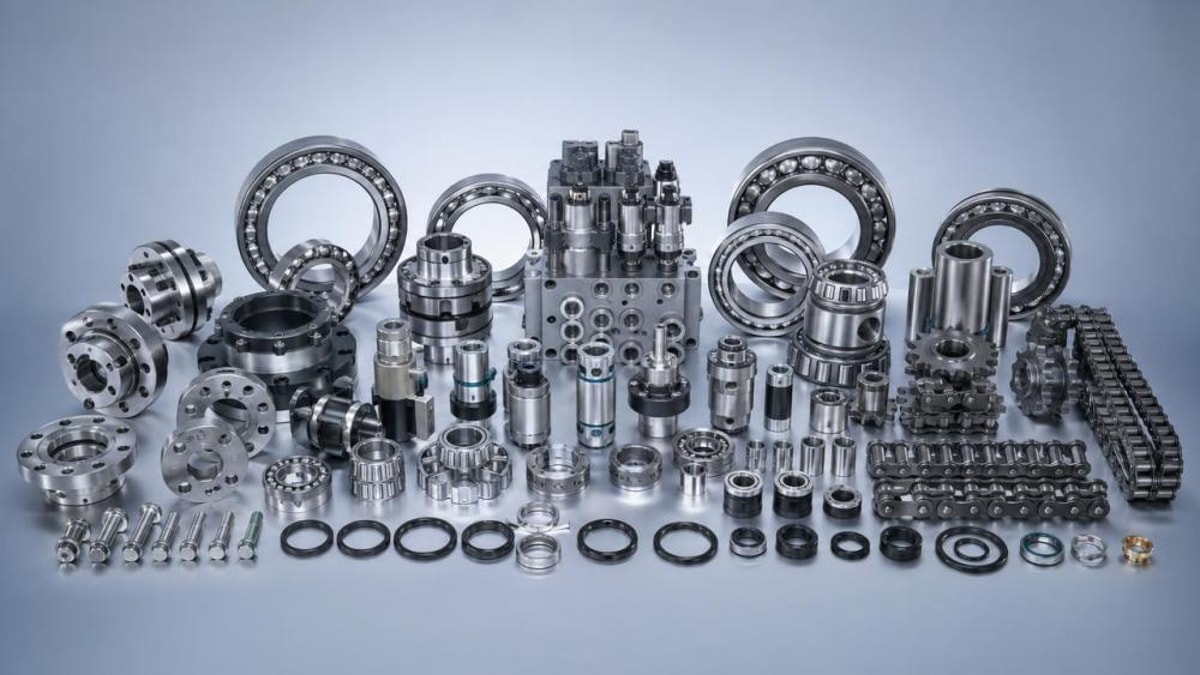
This is especially important in sectors influenced by core components, power transmission systems, and fluid control technologies. Bearings, chains, hydraulic manifolds, couplings, seals, and motion elements may seem small within a larger machine, yet they concentrate tolerance risk, maintenance burden, and sourcing exposure. Industrial standardization helps enterprises manage those hidden leverage points before they trigger costly redesign cycles.
Typical business signals that standardization should start now
- Engineering change orders keep rising after prototype approval.
- Multiple plants buy similar components under different specifications.
- Supplier substitution causes repeated validation delays.
- Field service teams report avoidable part incompatibility.
- Procurement savings are offset by quality incidents or assembly variation.
A practical comparison of high-risk scenarios
The table below shows how industrial standardization affects different operating contexts and why the cost of inaction rises sharply when organizations wait until late-stage execution.
Scenario 1: New product development and platform engineering
For companies launching new machines, modules, or production lines, industrial standardization is most valuable before detailed design becomes locked. This is the stage where enterprises decide whether future products will share interfaces, torque classes, sealing solutions, fastener systems, and inspection criteria. If those choices are made inconsistently by project teams, late-stage rework becomes almost inevitable.
Decision-makers in this scenario should focus on platform logic rather than individual part cost. A non-standard shaft dimension or custom valve block layout may appear acceptable for one launch, but it can block future sourcing flexibility and reduce reuse across product families. Standardized design rules make later product variation faster and less risky.
This is also where technical intelligence matters. Material selection, tribology performance, and fluid-path reliability often determine whether a standard can be safely applied across use cases. Enterprises that use data-driven engineering governance can separate true performance exceptions from avoidable customization.
What leaders should standardize first in development programs
Not every item needs to be frozen at once. The highest return usually comes from standardizing the decisions that affect many downstream functions.
Priority areas
- Core component interfaces such as mounting sizes, connection points, and shaft or port standards.
- Material grades and surface treatment rules for wear, corrosion, and fatigue-sensitive parts.
- Test protocols for pressure, life cycle, vibration, leakage, and dimensional capability.
- Documentation formats including drawing control, revision discipline, and approved substitutions.
When industrial standardization starts at platform level, engineering teams spend less time on repeated argument and more time on differentiated performance. That shift is strategically important for leaders who want innovation without uncontrolled variety.
Scenario 2: Multi-plant operations and global supply chain alignment
A second high-impact scenario appears when enterprises operate across multiple factories, countries, or supplier clusters. In these environments, industrial standardization is less about pure design discipline and more about operational consistency. One plant may accept a tolerance band that another rejects. One sourcing team may buy to local habit instead of common specification. The result is fragmented quality and unstable cost performance.
For decision-makers, this scenario often hides losses inside purchasing variance, transfer delays, and non-comparable quality data. Without standardization, benchmarking between sites becomes unreliable because each location is effectively producing a different version of the same product. Enterprises then struggle to scale best practices or qualify alternate suppliers quickly.
Industrial standardization helps create a common technical language across engineering, procurement, quality, and operations. That is particularly valuable when special steel pricing, trade restrictions, and regional availability affect supply continuity. A company with harmonized standards can react faster because it knows which substitutions are technically acceptable and which would create downstream risk.
How needs differ by enterprise footprint
Common oversight in this scenario
Many companies standardize procurement codes without standardizing acceptance criteria. That creates the illusion of control while quality variation remains unresolved. Effective industrial standardization requires alignment between what is bought, how it is validated, and how deviations are escalated.
A second oversight is failing to classify standards by criticality. Not every feature deserves the same control level. Leaders should distinguish between safety-critical, performance-critical, service-critical, and commercially flexible parameters. This allows enterprises to stay disciplined without becoming rigid.
For organizations managing precision components and motion systems, that classification prevents overengineering while still protecting reliability where it matters most.
Scenario 3: Aftermarket service, maintenance, and lifecycle support
Industrial standardization is equally important after a product leaves the factory. In service-driven businesses, late-stage rework does not only happen in production. It also appears as emergency replacement, technician confusion, excess spare inventory, and extended customer downtime. For companies selling industrial equipment, these costs directly affect account retention and brand trust.
This scenario is especially relevant when products include bearings, chains, hydraulic assemblies, seals, or transmission units that wear under operating load. If serviceable parts are not standardized across product generations, every maintenance event becomes slower and more expensive. Enterprises carry more stock, field teams need more training, and customers face unpredictable repair windows.
Decision-makers should evaluate whether industrial standardization can improve interchangeability, simplify diagnostics, and shorten service cycles. In many businesses, aftermarket efficiency produces a clearer financial return than design savings alone because it affects both cost and recurring revenue.
Service-oriented standardization checkpoints
- Can technicians identify equivalent parts without engineering escalation?
- Do maintenance manuals use the same naming and coding structure across regions?
- Are wear components designed for standardized replacement intervals and tools?
- Can distributors forecast stock based on a reduced set of standardized assemblies?
When caution is necessary
Not every installed base can be forced into immediate uniformity. Legacy equipment, customer-specific modifications, and regulatory constraints may limit how aggressively standards can be imposed. In such cases, the smarter approach is to create a phased standardization map, prioritizing high-failure and high-volume service parts first.
That approach preserves commercial continuity while still reducing future complexity. It also gives leadership a more accurate view of lifecycle profitability, which is often obscured when service variation is treated as a normal operating condition.
How to judge fit: which companies gain fastest from industrial standardization
Although industrial standardization benefits most enterprises, some organizations should move earlier and more decisively than others. The strongest candidates are companies with repeated product architectures, quality-sensitive components, long supply chains, or high service obligations. These characteristics magnify the cost of inconsistency.
By contrast, highly customized project businesses should not avoid standardization; they should apply it selectively. The goal is to standardize the hidden backbone of engineering and operations while preserving customer-facing flexibility where it genuinely adds value.
For executive teams, the practical test is whether recurring variation improves revenue or merely consumes resources. If variation adds little market value but creates sourcing, validation, or service friction, industrial standardization is likely overdue.
A simple executive decision framework
Ask these four questions
- Where does rework most often appear: design, procurement, production, or service?
- Which component groups create repeated qualification or substitution problems?
- How much margin is lost through low-volume specification diversity?
- Which standards would improve resilience without blocking innovation?
These questions help move the discussion from abstract quality goals to scenario-based business decisions. They also support stronger collaboration between technical and commercial teams, which is essential when standardization touches supplier strategy, product positioning, and capital allocation.
Common misjudgments that make late-stage rework more expensive
One common mistake is assuming industrial standardization only matters for large corporations. In reality, mid-sized manufacturers may suffer even more from weak standards because they have fewer engineering resources to absorb repeated redesign and fewer buyers to manage fragmented supply risks.
Another misjudgment is treating standards as static paperwork. Strong standardization is a living management system tied to material intelligence, performance data, and field feedback. When steel availability shifts, when hydraulic performance requirements evolve, or when maintenance-free component technologies improve, standards should be updated with discipline rather than ignored until a failure occurs.
A third mistake is pushing standardization too late, after customer commitments and tooling investments are already fixed. At that point, the company pays twice: once for the original complexity and again for the correction. This is why the core lesson is straightforward: industrial standardization costs less than late-stage rework because prevention is structurally cheaper than correction.
Action steps for decision-makers
- Map the top ten recurring component or process deviations across the business.
- Rank them by lifecycle cost, not only purchase price.
- Create a cross-functional ownership model for standards governance.
- Use pilot scenarios to prove gains in one product line, one plant, or one service category first.
For companies operating in precision manufacturing ecosystems, this is also the point where external technical intelligence becomes valuable. Better decisions come from understanding component evolution, tribology behavior, material risk, and supply structure together rather than in isolation.
Conclusion: align industrial standardization with your real operating scenario
Industrial standardization delivers its strongest results when enterprises apply it according to business scenario rather than as a generic compliance exercise. In new product development, it reduces redesign and protects platform efficiency. In multi-site operations, it stabilizes quality and supply flexibility. In aftermarket service, it improves responsiveness, lowers complexity, and supports customer loyalty.
For enterprise decision-makers, the most effective next step is to assess where non-standard variation is currently eroding margin, slowing delivery, or weakening technical credibility. From there, priorities can be set around component families, validation methods, serviceability, and supplier governance.
When standards are shaped early and managed intelligently, organizations gain more than consistency. They gain speed, resilience, and stronger control over the hidden economics of precision manufacturing. That is why industrial standardization is not a burden to postpone, but a strategic discipline to deploy before late-stage rework starts writing the bill.
Related News
- Industrial Automation Components Supplier: Key Compliance Checks Before Scaling OrdersMay 05, 2026Industrial automation components supplier compliance checks can prevent costly delays and quality risks. Learn what to verify before scaling orders and protect supply continuity.
- Material Science Applications Facing New Compliance Pressure in 2026May 04, 2026Material science applications face stricter 2026 compliance demands. Discover how QC and safety teams can improve traceability, reduce risk, and choose audit-ready materials with confidence.
- Industrial standardization costs less than late-stage reworkApr 30, 2026Industrial standardization cuts costly late-stage rework, improves quality consistency, and strengthens supply chain resilience. See how early standards protect margins and speed growth.
Related News
- 00
0000-00
Industrial Automation Components Supplier: Key Compliance Checks Before Scaling Orders - 00
0000-00
How to Shortlist a Precision Engineering Supplier for Repeatable Quality - 00
0000-00
Evolutionary Trends in Precision Engineering: What Is Changing in Supplier Capabilities - 00
0000-00
When Precision Manufacturing OEM Makes Sense Over In-House Production - 00
0000-00
Hydraulic Valve Blocks for Precision Engineering: What Affects Service Life Most
Tribology Specialist
Strategic Intelligence Center