





Industrial automation components are expected to connect seamlessly, yet mismatched protocols, tolerance gaps, and incompatible control logic often create costly integration issues. For technical evaluators, understanding where these failures originate is essential to reducing commissioning risk, protecting system reliability, and making better sourcing decisions across increasingly complex automation environments.
Why do industrial automation components create integration issues in the first place?
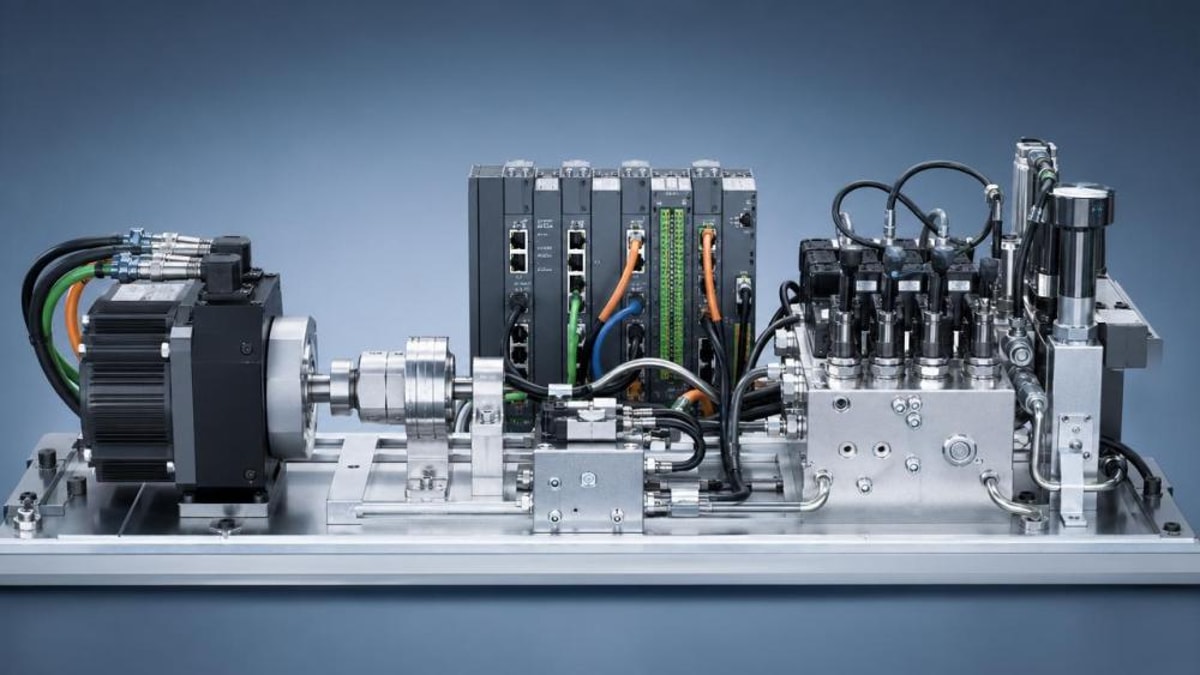
In most sectors, industrial automation components are purchased as part of a wider control architecture rather than as isolated parts. A servo drive may be electrically compatible, but still fail at the system level because of fieldbus mismatch, PLC instruction limits, encoder feedback differences, or mechanical coupling tolerances outside the expected range. For technical evaluators, the problem is rarely one defective component. It is usually a stack of small incompatibilities that only becomes visible during commissioning.
Integration risk grows when projects combine components from 3 to 5 suppliers, legacy machines with new controllers, or fluid power units with digital monitoring layers. In these mixed environments, acceptable variation becomes narrow. Shaft concentricity, signal voltage levels, response times, and diagnostic communication all need to align within typical engineering windows such as ±0.01 mm to ±0.05 mm in precision assemblies, 24 V DC control logic ranges, or millisecond-scale response expectations for motion synchronization.
Another source of failure is documentation quality. Technical teams often receive data sheets that cover nominal ratings but omit crucial integration conditions such as startup torque, pressure ripple behavior, lubrication requirements, or protocol version dependencies. A component can meet standalone specifications and still disrupt a line after 8 to 16 hours of continuous operation because thermal drift, contamination sensitivity, or communication timeout thresholds were not evaluated in advance.
This is where a component intelligence platform becomes valuable. GPCM focuses on the underlying industrial core components, power transmission systems, and fluid control technologies that often determine whether an automation project remains stable after handover. For evaluators, intelligence about tolerance chains, material behavior, lifecycle expectations, and cross-border supply variables helps move sourcing decisions from reactive troubleshooting to structured risk control.
The four most common integration fault layers
- Communication layer: incompatible Ethernet/IP, PROFINET, Modbus TCP, CANopen, or proprietary protocol versions cause delayed startup or incomplete diagnostics.
- Mechanical layer: coupling dimensions, bearing fits, backlash, shaft hardness, and mounting tolerances differ from the assumptions used in the machine design.
- Fluid and power layer: hydraulic valve blocks, pneumatic manifolds, or drive systems show different flow, leakage, or pressure response than the control sequence requires.
- Logic and lifecycle layer: alarm mapping, maintenance intervals, firmware revision control, and spare part continuity are not aligned across the automation cell.
When technical evaluators screen industrial automation components through these four layers early, they can identify hidden incompatibilities before factory acceptance testing, instead of discovering them during a 2 to 4 week commissioning window when delays are far more expensive.
Which industrial automation components cause the most integration friction?
Not all components carry the same integration risk. In cross-industry automation, the highest-friction items tend to be those that sit between mechanical energy, control logic, and dynamic load variation. These include servo systems, gearboxes, bearings, chains, couplings, hydraulic manifolds, proportional valves, sensors, and edge I/O devices. Each one becomes a system bottleneck when its real operating conditions differ from what the bill of materials suggests.
Bearings and transmission components are often underestimated because they look standardized. Yet fit class, preload requirements, lubricant chemistry, sealing design, and vibration behavior can differ enough to affect motion accuracy and maintenance cycles. A maintenance-free chain selected for corrosion resistance may still create indexing variation if elongation behavior under intermittent load was not matched to the drive profile.
Fluid control components also create repeat integration issues. Hydraulic valve blocks that appear interchangeable may have different internal pressure loss, contamination tolerance, or spool response behavior. In automated equipment that depends on precise clamp, lift, or press sequences, a response difference of only a few hundred milliseconds can produce nuisance alarms, quality drift, or actuator miscoordination.
The table below summarizes where industrial automation components most often create friction during evaluation, assembly, and startup.
For technical evaluators, the lesson is clear: industrial automation components should be reviewed as interaction nodes, not only as catalog items. GPCM’s intelligence approach is especially useful here because it connects material science, tribology, fluid dynamics, and commercial supply insight into one decision framework instead of treating each component family separately.
A practical judgment rule
If a component affects one or more of the following 3 variables, it deserves elevated integration scrutiny: motion accuracy, control timing, or maintenance continuity. That rule helps evaluators prioritize limited review time when projects involve hundreds of line items and delivery windows under 6 to 8 weeks.
How should technical evaluators assess compatibility before purchase?
A strong evaluation process does not begin with price comparison. It begins with defining acceptance boundaries at the system level. Technical evaluators should translate machine requirements into a compatibility checklist covering mechanics, controls, fluid power, environment, and serviceability. This is especially important when industrial automation components are sourced globally and lead times force second-source or substitute decisions.
In practice, a 5-point review method works well across industries. First, confirm interface dimensions and allowable tolerance bands. Second, confirm electrical and communication compatibility. Third, check duty cycle and thermal behavior across continuous or intermittent operation. Fourth, verify maintenance inputs such as lubrication, filtration, and spare parts. Fifth, confirm documentation depth, including revision traceability and installation limitations.
This structured approach reduces the chance that a component appears suitable on nominal data alone. It also helps procurement teams understand why two technically similar items may carry very different commissioning risks. A lower purchase price can become a higher total cost if the system needs extra adapters, firmware workarounds, retuning, or unscheduled downtime during the first 3 months.
The table below provides a practical selection matrix for industrial automation components that routinely participate in integration-sensitive projects.
Evaluators can use this matrix during RFQ review, technical clarification, and substitute approval. It is particularly effective when aligned with a 4-step implementation flow: preselection, interface confirmation, sample or pilot verification, and commissioning readiness review. GPCM supports this process by connecting component-level technical knowledge with market signals such as special steel price shifts, trade quota impacts, and evolving demand for long-life precision parts.
What documents should be mandatory before approval?
Minimum package for risk-controlled sourcing
- Dimensional drawings with tolerance callouts, not only nominal size references.
- Electrical or hydraulic interface details, including connector, port, and pin assignment information.
- Duty-cycle guidance covering continuous operation, peak loading windows, and warm-up behavior over 30 to 60 minutes.
- Maintenance and contamination control guidance, such as filtration class or lubrication interval ranges.
- Revision control notes for firmware, sealing materials, or internal design changes that could affect field interchangeability.
This documentation discipline is often what separates stable automation projects from recurring startup disputes between engineering, procurement, and integrators.
What standards, tolerances, and lifecycle factors are often overlooked?
Many integration problems are not caused by ignoring big specifications. They come from ignoring the quiet details. A component may fit ISO-related dimensional expectations or common control cabinet practices, yet still underperform because mounting rigidity, lubrication condition, EMC layout, or cleanliness level was not defined. For industrial automation components, the hidden variables often matter more than the catalog headline.
Technical evaluators should pay special attention to tolerances that accumulate across assemblies. A gearbox with acceptable backlash, a coupling with acceptable misalignment, and a bearing arrangement with acceptable preload can still create unacceptable positioning error when stacked together. In precision motion systems, the total error budget often needs to be reviewed over the full chain, not per component in isolation.
Lifecycle support is another overlooked factor. Even when initial integration succeeds, spare part continuity over 3 to 7 years can become the next constraint. If firmware revisions change protocol behavior, or if sealing materials change due to raw material availability, the replacement component may no longer behave the same way in an existing machine. This is why GPCM’s commercial insight and evolutionary trend tracking matter to evaluation teams managing global sourcing risk.
The following checklist helps evaluators review hidden risk areas before final approval of industrial automation components.
Five overlooked checkpoints that prevent late-stage integration trouble
- Confirm allowable contamination and lubrication conditions, especially for bearings, chains, and hydraulic control blocks.
- Review EMC and grounding assumptions for sensors, drives, and remote I/O in high-noise cabinets.
- Check protocol version, firmware dependency, and diagnostic object mapping before approving a communication-capable device.
- Verify replacement strategy, including lead time range, equivalent part path, and service documentation access.
- Assess environmental drift over actual duty conditions, such as 10°C to 40°C ambient variation or repeated start-stop cycles every 20 to 60 seconds.
A disciplined review of these 5 checkpoints can reduce the frequency of substitute rejection, tuning rework, and post-installation reliability complaints. It also gives procurement teams a more defensible basis for comparing bids beyond unit price alone.
FAQ for technical evaluators dealing with industrial automation components
How do I know whether two industrial automation components are truly interchangeable?
Do not rely on matching headline ratings. Interchangeability should be checked across at least 4 layers: interface dimensions, operating behavior, control compatibility, and service continuity. Two parts can share the same voltage, pressure, or nominal size but differ in backlash, response time, feedback format, contamination tolerance, or firmware support. A short pilot test or bench validation is often justified when the replacement affects motion accuracy or safety logic.
Which procurement mistake causes the most integration delays?
The most common mistake is approving industrial automation components based only on catalog specifications and price, without verifying the machine-side assumptions. Delays often appear when adapters, communication gateways, or parameter modifications are needed after delivery. On time-critical projects, even a 7 to 15 day clarification cycle can disrupt installation sequencing and supplier coordination.
Are mechanical components really as risky as electronic controls?
Yes, especially in precision manufacturing, automated handling, and continuous-duty equipment. Mechanical and tribological variables often create slower but more persistent failure modes than controls. Misalignment, preload error, seal incompatibility, or poor lubrication selection may not stop the machine on day one, but they can trigger vibration, heat, or accuracy loss within the first 100 to 500 operating hours.
What should I ask when evaluating hydraulic or fluid control assemblies?
Ask about pressure band, flow path behavior, response time, contamination sensitivity, porting standard, and service access. Also ask whether the valve block or manifold was validated for comparable duty patterns such as rapid cycling, pressure holding, or synchronized multi-actuator control. These details matter more than nominal pressure rating alone.
Why work with GPCM when integration risk is high?
When technical evaluators face difficult sourcing decisions, the challenge is rarely access to more brochures. The challenge is connecting component physics, standards, lifecycle risk, and market reality into one usable decision path. GPCM is built around that need. Its focus on industrial core components, power transmission systems, and fluid control technologies helps buyers and engineering teams evaluate industrial automation components at the level where integration success is actually determined.
The Strategic Intelligence Center adds another layer of value. By combining tribology expertise, fluid dynamics insight, and industrial economic analysis, GPCM supports decisions involving high-performance composite bearings, maintenance-free chains, integrated hydraulic valve blocks, and other precision components that often sit behind recurring automation bottlenecks. This is especially useful when teams must compare alternatives under tight lead times, cost pressure, or uncertain supply continuity.
For companies managing new builds, line retrofits, or cross-border sourcing, a practical engagement can cover 6 priority topics: parameter confirmation, component selection, compatibility review, delivery cycle expectations, certification and documentation questions, and sample or pilot support planning. That kind of focused dialogue helps technical evaluators move faster without relaxing engineering discipline.
If your project involves industrial automation components with uncertain interface fit, protocol compatibility, tolerance sensitivity, or replacement risk, contact GPCM to discuss the exact review scope. You can request support for drawing checks, substitution evaluation, long-life component selection, fluid control matching, delivery risk assessment, or quotation alignment for precision-critical assemblies. Precision Links Industry, Motion Connects the World.
Related News
- What to Check Before Upgrading High-Pressure Hydraulic SystemsMay 04, 2026High-pressure hydraulic systems upgrade guide: learn what to check for safety, compatibility, controls, lifecycle cost, and uptime before any retrofit delivers real performance gains.
- Industrial automation components that create integration issuesApr 30, 2026Industrial automation components often cause hidden integration issues across controls, mechanics, and fluid systems. Learn how to spot risks early and make smarter sourcing decisions.
Related News
- 00
0000-00
Industrial Automation Components Supplier: Key Compliance Checks Before Scaling Orders - 00
0000-00
How to Shortlist a Precision Engineering Supplier for Repeatable Quality - 00
0000-00
Evolutionary Trends in Precision Engineering: What Is Changing in Supplier Capabilities - 00
0000-00
When Precision Manufacturing OEM Makes Sense Over In-House Production - 00
0000-00
Hydraulic Valve Blocks for Precision Engineering: What Affects Service Life Most
Hydraulic System Analyst
Strategic Intelligence Center